
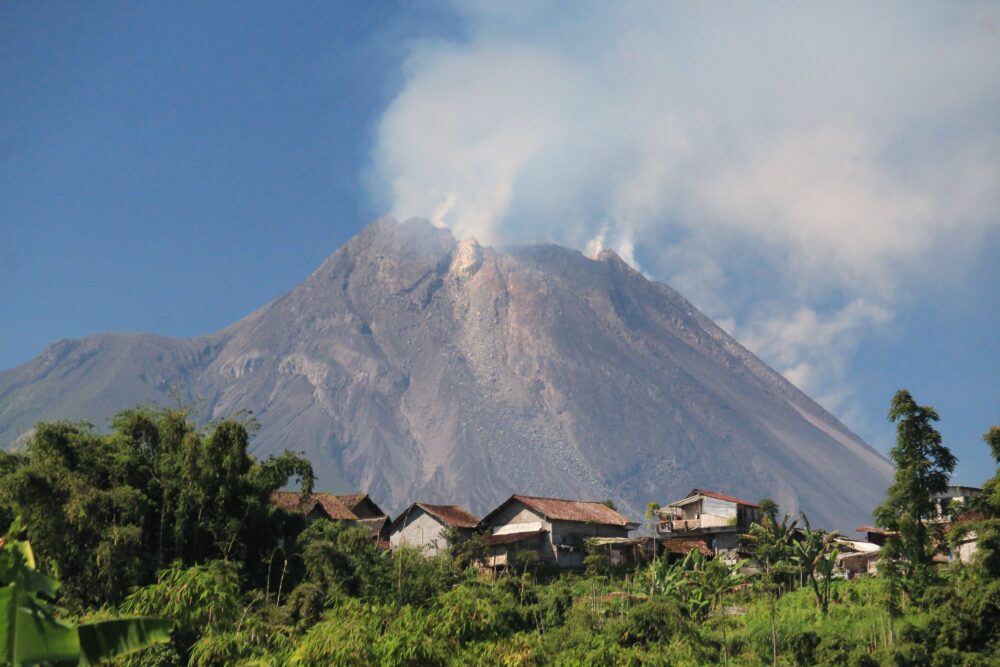
L’alluvione di fango del maggio 2024 è partita dal Marapi, a Sumatra Occidentale, non dal Merapi di Giava: due vulcani diversi, due catene di allerta diverse. Nessuna delle due è retta da un modello predittivo: la difesa reale è fatta di geofoni, pluviometri, telecamere e soglie di pioggia, con un anticipo misurabile in minuti. Capire perché l’intelligenza artificiale non sia ancora entrata in questo punto del sistema dice molto su dove le previsioni funzionano e dove no.
Nella notte dell’11 maggio 2024 l’acqua è arrivata prima delle sirene. Dal Marapi, vulcano di 2.891 metri a Sumatra Occidentale, una massa di pioggia ha scaricato a valle i depositi eruttivi accumulati sui fianchi: banjir lahar dingin, «alluvione di lahar freddo», mescolata a piene improvvise. Ha colpito Agam, Tanah Datar, Padang Panjang, Padang Pariaman e Padang. Il bilancio dell’agenzia nazionale per i disastri, la BNPB, al 16 maggio parlava di 67 morti e 20 dispersi; al 14 maggio erano 50 morti, 27 dispersi, 37 feriti, 3.396 sfollati; il 29 maggio il centro operativo Pusdalops ne contava 63 e 10 dispersi. Le cifre non coincidono, e questo è già un dato: in un evento di questo tipo la contabilità si riconcilia per settimane.
Da quella notte in poi, in Europa e altrove, è circolata una versione della storia che vale la pena smontare pezzo per pezzo, perché racconta più di noi che dell’Indonesia. Suona così: dopo Sumatra il governo indonesiano avrebbe messo in campo un modello predittivo — spesso implicitamente di apprendimento automatico — capace di anticipare i lahar del Merapi, il vulcano più sorvegliato di Giava, avvisando i villaggi a valle. È falsa in tre punti distinti, e i tre punti insieme spiegano perché l’intelligenza artificiale, in questo specifico anello della catena, non c’è ancora.
Primo: Marapi e Merapi sono due vulcani
Differiscono per una vocale e per milletrecento chilometri di mare. Il Marapi sta a Sumatra Occidentale; il Merapi sta a Giava centrale, sopra Yogyakarta. La confusione non è innocua, perché porta con sé anche una confusione istituzionale. Il Merapi è seguito quotidianamente dal BPPTKG, il centro di ricerca e sviluppo per le tecnologie di mitigazione del rischio geologico con sede a Yogyakarta; il PVMBG, il centro nazionale di vulcanologia, e il BPPTKG stanno entrambi sotto la Badan Geologi del ministero ESDM, ma non sono la stessa cosa. Gli interventi seguiti al maggio 2024 sono stati fatti da BNPB e BMKG (l’agenzia meteorologica) sul Marapi. Nessuna fonte documenta un nesso fra il disastro di Sumatra e nuovi investimenti sul Merapi.
Secondo: un lahar non è un’eruzione
È questo il punto tecnico che cambia tutto. Sul Merapi, come sul Marapi, i lahar sono in larghissima parte fenomeni secondari: la pioggia intensa cade su depositi piroclastici sciolti lasciati da un’eruzione anche di anni prima, li satura, li mette in movimento lungo gli alvei. L’eruzione del Merapi del 2010 ha espulso almeno 130 milioni di metri cubi di materiale, in gran parte incanalati nel Kali Gendol, e negli anni successivi si sono contati oltre cento eventi di lahar. Sul Marapi, a giugno 2024, i geologi stimavano ancora circa 700.000 metri cubi di materiale depositato su cima e fianchi: munizioni già caricate, in attesa del grilletto meteorologico.
Prevedere un’eruzione e prevedere un lahar sono problemi diversi. Il primo ha precursori lunghi — sismicità, deformazione del suolo, chimica dei gas — su cui esiste una letteratura enorme e su cui, effettivamente, si stanno sperimentando classificatori automatici di segnali sismici. Il secondo ha un precursore solo: quanto piove, dove, e per quanto tempo, su una superficie la cui disponibilità di sedimento cambia dopo ogni evento.
Terzo: quello che c’è davvero è rilevamento, non previsione
Dopo il 2010 il BPPTKG ha installato lungo i fiumi del Merapi stazioni di monitoraggio dei lahar con geofoni e telecamere IP. Il geofono è un sensore di vibrazione: un lahar in movimento genera un rumore sismico continuo, a banda larga, riconoscibile e diverso da un terremoto. Quando l’energia registrata supera una soglia, la stazione trasmette; la telecamera serve a confermare visivamente che sia davvero una colata e non un camion, un temporale, un franamento minore. È un sistema di detection. Vede il lahar quando il lahar è già partito. L’anticipo che offre alle case più a valle è un’alea di minuti, non di ore, e dipende da quanto sono lontane dal sensore.
Accanto ai geofoni ci sono i pluviometri e le soglie di pioggia. A dicembre 2024 il BPPTKG indicava come intervallo indicativo di innesco 20–60 mm all’ora protratti per più di un’ora, con l’intenzione di far scattare notifiche già oltre i 10 mm nei primi dieci minuti, aggiornando poi la valutazione verso i 60 mm/h. È il pezzo che somiglia di più a una previsione, ed è una regola numerica esplicita: due numeri e una finestra temporale. Non un modello addestrato, non una rete neurale. Va detto che non risulta un documento normativo che la formalizzi: è una prassi operativa dichiarata pubblicamente dall’ente.
Cosa è stato fatto sul Marapi, invece
Il 9 e 10 giugno 2024 la BNPB ha avviato il coordinamento per installare un sistema di allerta precoce «integrato» — meteo, attività vulcanica, sensori e sirene — sui fiumi che scendono verso Tanah Datar, Agam e Padang Panjang. Il capo della stazione geofisica BMKG di Padang Panjang, Suaidi, indicava la necessità di presidiare 23 punti a rischio, con l’allarme che attiva l’autoevacuazione gestita dalle comunità dei nagari, le unità amministrative tradizionali minangkabau. Nel 2025 risultano sei unità installate dalla BNPB su quattro fiumi con sorgente sul Marapi, e la Provincia di Sumatra Barat ne ha chieste altre. Ventitré punti ritenuti necessari, sei realizzati: il divario è la storia vera.
Dove l’intelligenza artificiale potrebbe entrare — e perché non ci entra
Un modello di apprendimento automatico, in questo dominio, avrebbe un compito ovvio: classificare in tempo reale il segnale dei geofoni per distinguere un lahar da tutto il resto, riducendo i falsi allarmi che erodono la fiducia delle comunità nelle sirene. È un problema di classificazione di serie temporali sismiche, tecnicamente alla portata. Un secondo compito sarebbe più ambizioso: stimare, dai radar meteo e dalla mappa aggiornata dei depositi, la probabilità che nelle prossime ore un certo bacino produca una colata. Non risulta che sistemi simili siano operativi nella catena di allerta indonesiana per i lahar, e non è prudente presumerlo.
Le ragioni, però, sono istruttive. Un classificatore ha bisogno di eventi etichettati: un vulcano produce decine di lahar l’anno, non milioni, e ogni eruzione riscrive la geometria del bacino rendendo obsoleti i dati vecchi. Un modello probabilistico ha bisogno di una variabile — il sedimento disponibile — che si misura con rilievi sul campo e droni, non con un sensore in continuo. E soprattutto: un sistema che rileva con certezza e senza addestramento, come un geofono con soglia, è più difendibile davanti a una comunità di quanto lo sia una probabilità. Chi suona la sirena deve poter spiegare perché.
Il numero che cambia la scala del problema
Sui fianchi del Merapi vivono circa 1,8 milioni di persone, con una densità media di 764 abitanti per chilometro quadrato entro dieci chilometri dalla cima. È uno dei vulcani più densamente popolati della Terra. In un contesto simile, guadagnare cinque minuti di preavviso non è un dettaglio ingegneristico: è la differenza fra attraversare un ponte e non attraversarlo.
Ed è qui che la storia si ribalta rispetto a come viene raccontata di solito. L’ultimo miglio dell’allerta lahar in Indonesia non è algoritmico: è una sirena, una radio locale, un capovillaggio, una comunità di nagari che ha deciso in anticipo dove si va e per quale strada. L’intelligenza artificiale, se e quando arriverà, non sostituirà quel miglio. Al massimo renderà più affidabile il segnale che lo fa partire — e ridurre i falsi allarmi, in un sistema in cui la decisione finale la prende un essere umano con quattro minuti a disposizione, vale più di qualunque previsione a lungo termine.