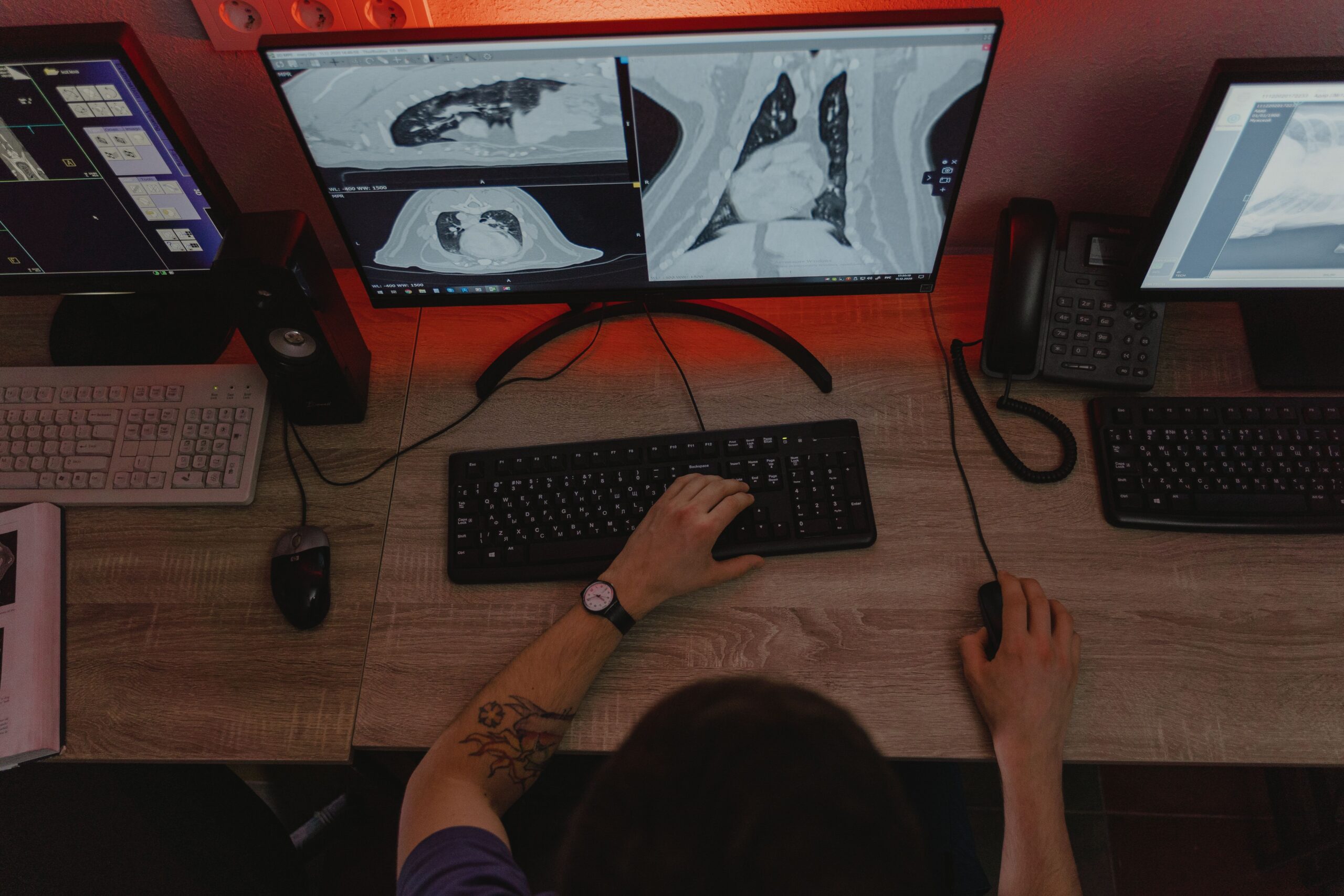
Artificial intelligence is transforming medical diagnostics, detecting pathologies with precision surpassing the human eye in fields like radiology, oncology, and ophthalmology. Let’s explore how these systems work and what challenges still lie ahead.
In recent years, artificial intelligence has entered hospital wards and laboratories, transforming from a futuristic promise into a concrete working tool for doctors and radiologists. Deep learning algorithms, trained on millions of medical images, can now identify patterns imperceptible to the human eye, opening new frontiers in early diagnosis of numerous pathologies.
How AI-Assisted Diagnosis Works
Artificial intelligence systems applied to medicine are primarily based on convolutional neural networks capable of analyzing images such as X-rays, CT scans, MRIs, and retinal scans. These models are trained on vast databases of images labeled by specialists, learning to recognize distinctive signs of tumors, fractures, hemorrhages, or tissue alterations with precision that in some cases surpasses that of expert radiologists.
A prime example involves breast cancer diagnosis: algorithms developed by international research centers have demonstrated lower error rates compared to traditional medical teams, reducing both false positives and false negatives. Similar results are seen in ophthalmology, where AI can detect signs of diabetic retinopathy from simple retinal photographs, enabling mass screening even in areas with a shortage of specialists.
Concrete Clinical Applications
- Predictive radiology: automatic identification of suspicious pulmonary nodules in early stages
- Digital pathology: analysis of histological slides for tumor classification
- Dermatology: melanoma recognition through photographic skin analysis
- Cardiology: automated interpretation of electrocardiograms to detect arrhythmias
- Genomics: identification of genetic mutations linked to rare diseases
Benefits for the Healthcare System
The integration of AI in diagnostics doesn’t replace physicians but amplifies their capabilities, serving as an ever-available, tireless second opinion. This translates into reduced reporting times, greater accuracy in complex diagnoses, and the possibility of conducting large-scale screening even in resource-limited settings. Furthermore, AI can process enormous amounts of clinical data, correlating information from different tests to provide a more complete and personalized diagnostic picture.
Remaining Challenges
Despite extraordinary progress, crucial issues remain to be resolved. Algorithm transparency remains a central theme: physicians must be able to understand the reasoning behind an AI-suggested diagnosis, not simply accept it as an infallible oracle. There’s also the risk of bias in training datasets, which could reflect disparities in the representation of different ethnicities, ages, or genders, compromising result reliability for underrepresented populations.
Regulatory frameworks are trying to keep pace with innovation: agencies like the US FDA and the European EMA have already approved several AI-based medical devices, but the legislative landscape continues to evolve to ensure safety and clinical accountability.
Looking to the Future
The future of AI-assisted medical diagnostics is moving toward increasingly integrated systems, capable of combining imaging, genomic data, clinical history, and even information from wearable devices. The ultimate goal is truly personalized medicine, where every patient receives timely diagnoses and treatments calibrated to their unique characteristics, thanks to the computational power and continuous learning of these revolutionary technologies.