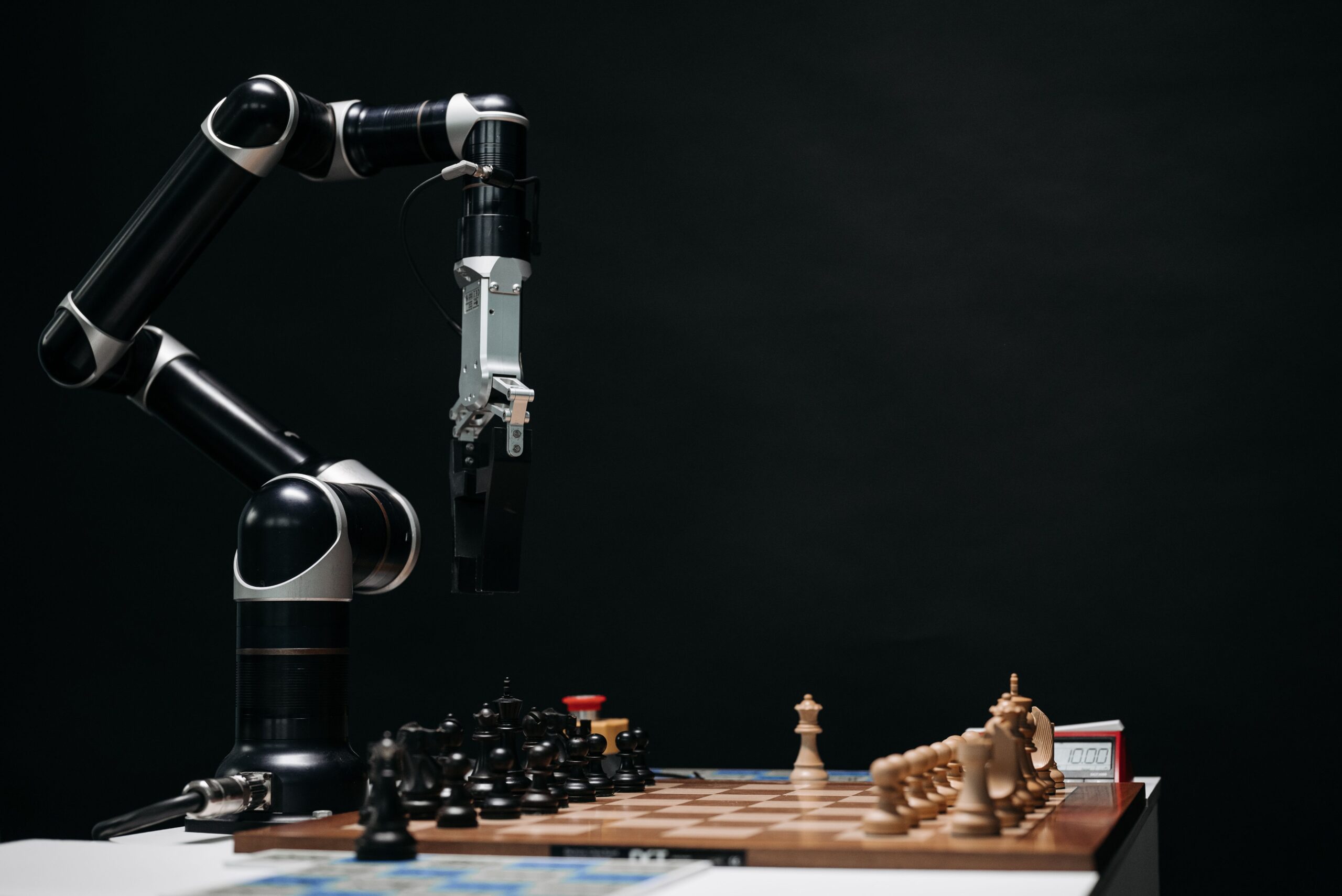
A new paradigm called ‘Physical AI’ is pushing generative models beyond the screen, teaching machines to understand the laws of physics so they can move, manipulate objects, and interact with real environments. Let’s explore how this technology is redefining robotics, simulation, and the future of automation.
In recent years, artificial intelligence has demonstrated extraordinary capabilities in generating text, images, and sounds. But a new frontier is gaining increasing attention: Physical AI, artificial intelligence capable of understanding and interacting with the physical laws of the real world. This is no longer just about processing digital data, but about giving machines a true ‘physical common sense’ needed to move, manipulate objects, and predict the consequences of their actions in three-dimensional space.
This approach emerges from the convergence of generative artificial intelligence, physics simulation, and advanced robotics. Physical AI models are trained not only on text and images, but on vast datasets that include simulations of gravity, friction, collisions, and fluid dynamics. The goal is to allow systems to predict how an object will fall, how a robotic arm should orient itself to grasp a fragile cup, or how an autonomous vehicle will react on a slippery surface.
Why physics is AI’s next challenge
Until now, most advances in artificial intelligence have focused on purely digital environments: language, images, code. However, the real world is governed by complex physical laws that traditional models struggle to intuitively grasp. A system can generate a photorealistic image of a bouncing ball, but it doesn’t necessarily ‘understand’ the forces at play. Physical AI seeks to bridge this gap, creating models that reason in terms of physical causality.
- High-fidelity simulations to train robots in virtual environments before real-world deployment
- Predictive models capable of anticipating trajectories and collisions
- Multisensory perception systems combining vision, touch, and proprioception
- Control algorithms that adapt in real time to different surfaces and materials
Concrete applications and industries involved
The potential of Physical AI extends to numerous industrial fields. In manufacturing robotics, mechanical arms will be able to autonomously adapt to previously unseen objects, without needing specific programming for each part. In logistics, automated warehouses will be able to handle packages of different shapes and weights with greater efficiency and safety. The healthcare sector could also benefit, with smart prosthetics capable of dynamically adapting to human movement.
Another area of great interest is autonomous vehicles, where physical understanding of the surrounding environment is crucial to ensure safety in adverse weather conditions or on uneven terrain. The video game and virtual reality industry is also watching these developments with interest, as they would allow the creation of virtual worlds with dynamically generated realistic physics, without the need for manual programming of every interaction.
The challenges still ahead
Despite the enthusiasm, the road to a mature Physical AI is still long. It requires enormous amounts of realistic simulation data, high computational capabilities, and algorithms capable of generalizing from virtual environments to real situations, a problem known as the ‘sim-to-real gap’. Furthermore, safety remains an absolute priority: a physical prediction error in an industrial robot or autonomous vehicle can have far more serious consequences than an error in a text-based chatbot.
Despite these difficulties, major tech companies and research centers are investing heavily in this direction, convinced that the ability to understand the physics of the real world represents the next great evolutionary leap for artificial intelligence, bringing it ever closer to a truly ’embodied’ intelligence that is useful in everyday life.