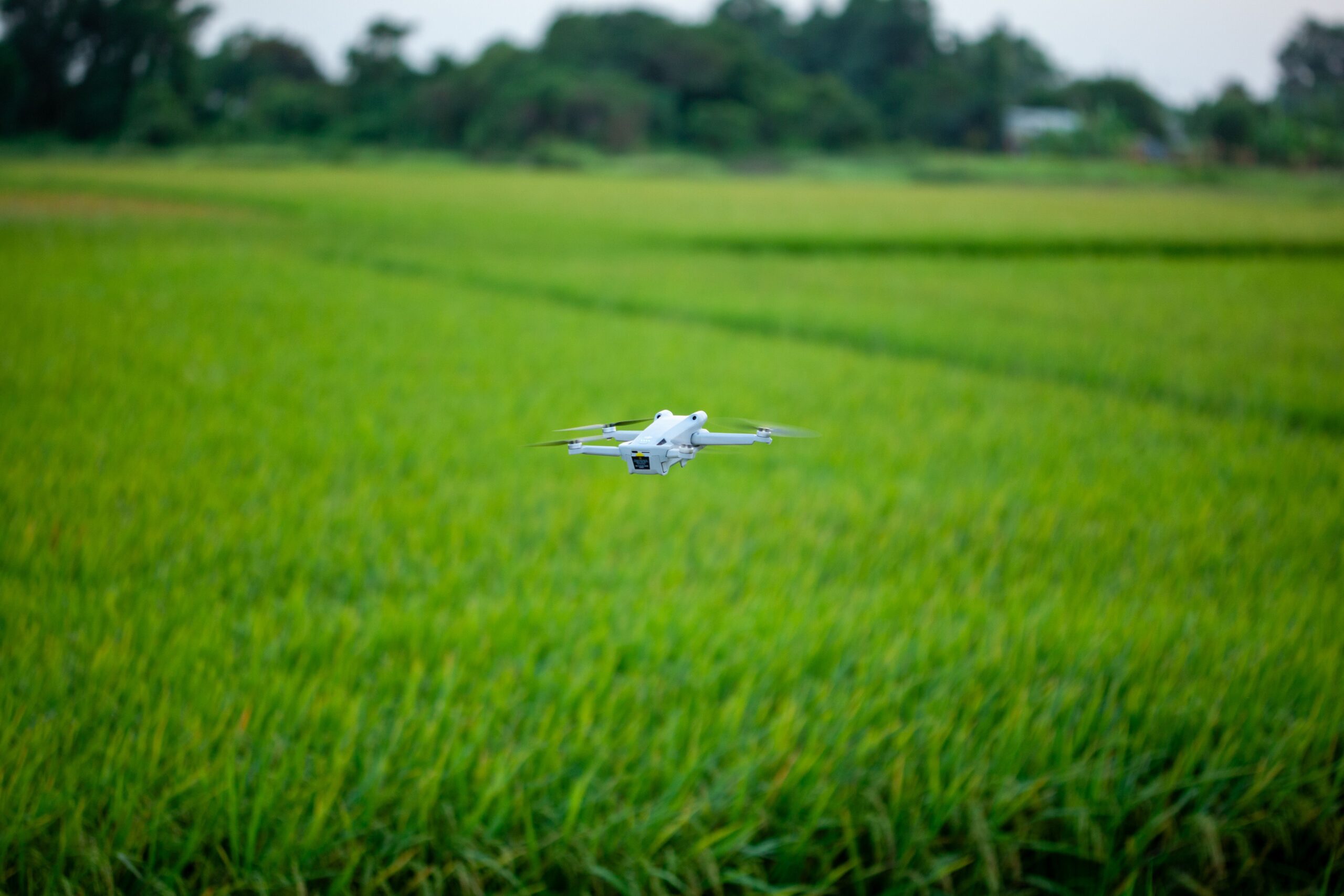
Artificial intelligence is revolutionizing traditional agriculture through smart sensors, drones, and predictive algorithms. Let’s explore how these technologies help farmers optimize resources, increase yields, and address climate challenges sustainably.
Agriculture, one of humanity’s oldest activities, is undergoing a silent but profound transformation thanks to artificial intelligence. What was once a science based on experience and empirical observation is now enriched with precise data, accurate forecasts, and intelligent automation, giving rise to what is called ‘precision agriculture’.
Sensors and Real-Time Monitoring
Modern farms use networks of IoT sensors distributed across fields to constantly monitor soil moisture, temperature, nutrient levels, and weather conditions. This data is analyzed by machine learning algorithms that identify patterns invisible to the human eye, allowing farmers to intervene exactly when and where needed, reducing water and fertilizer waste by up to 30%.
Drones and Computer Vision
Drones equipped with multispectral cameras fly over fields capturing images that are processed through computer vision. This technology allows for:
- Early identification of plant diseases before they spread
- Mapping crop health across vast expanses of land
- Detecting pest infestations in specific areas
- Accurately calculating biomass and estimating yields
This information enables targeted, localized treatments, replacing the traditional approach of uniformly treating entire fields.
Forecasting and Resource Optimization
Predictive algorithms analyze historical data, weather conditions, and soil characteristics to suggest the most suitable seed varieties, optimal timing for planting and harvesting, and precise quantities of required resources. Some systems can even predict market fluctuations, helping farmers plan production based on future demand.
Autonomous Agricultural Robotics
Autonomous robots are taking on repetitive and strenuous tasks such as harvesting delicate fruit, selective weed removal without pesticides, and precision seeding. These machines use AI to navigate autonomously between crop rows, recognize fruit ripeness, and operate with a delicacy impossible for traditional machinery.
Sustainability and Climate Challenges
As climate change makes agricultural seasons increasingly unpredictable, AI becomes an essential tool for adaptation. Predictive models help manage crop water stress, optimize fertilizer use while reducing environmental impact, and even suggest alternative crops more resilient to the new climatic conditions of a given region.
The Future of Smart Agriculture
Future prospects include increasingly integrated systems where the entire production chain, from planting to distribution, will be orchestrated by artificial intelligences capable of optimizing every phase of the process. This doesn’t mean replacing the farmer, but rather transforming them into a ‘digital farmer’, capable of making informed decisions based on precise data rather than intuition alone.
Smart agriculture thus represents not just a technological evolution, but a necessity to ensure global food security in a world with increasingly limited resources and a growing population.