
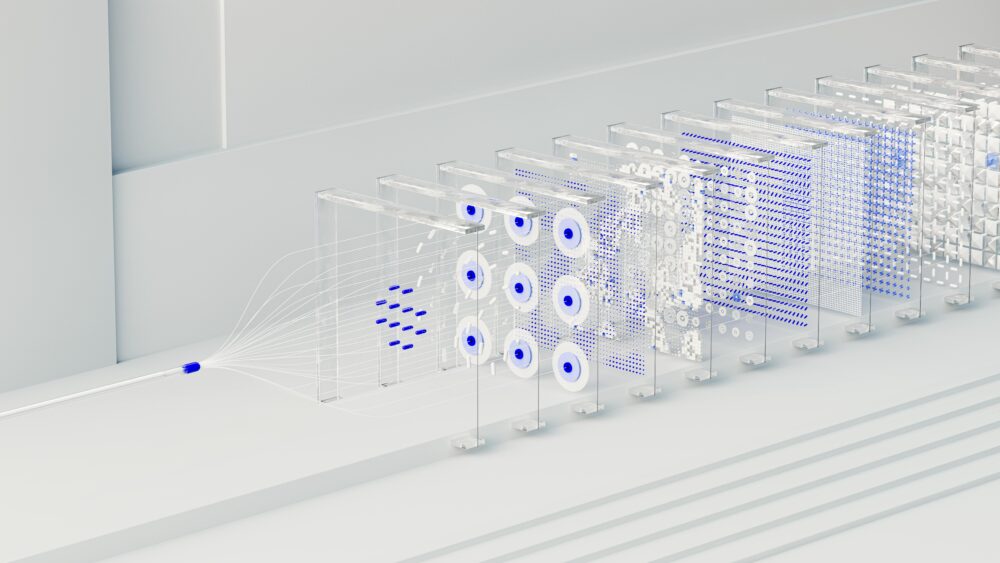
AI Edge Computing revolutionizes how we process data by bringing artificial intelligence directly to local devices. This technology reduces latency and increases privacy, opening new possibilities for real-time applications.
AI Edge Computing represents one of the most significant evolutions in the contemporary artificial intelligence landscape. This technology shifts data processing and AI algorithm execution from centralized clouds directly to peripheral devices, creating a new computational paradigm that is transforming numerous sectors.
What is AI Edge Computing
Edge Computing with artificial intelligence involves running machine learning and deep learning algorithms directly on end devices, such as smartphones, IoT sensors, security cameras, or autonomous vehicles. Instead of sending all data to remote servers for processing, edge devices process information locally using specialized chips and optimized AI models.
Revolutionary Advantages
- Ultra-Low Latency: Local processing eliminates data transfer times, enabling millisecond responses
- Enhanced Privacy: Sensitive data remains on the device, reducing breach risks during transmission
- Energy Efficiency: Lower bandwidth and energy consumption compared to continuous cloud transfer
- Reliability: Independent operation from network connectivity
Innovative Applications
AI Edge Computing is enabling previously impossible applications. In the automotive sector, autonomous vehicles can process camera images in real-time for critical driving decisions. In healthcare, portable devices analyze vital parameters providing immediate diagnoses. Smart cities use edge sensors to optimize traffic and energy without compromising citizen privacy.
Technical Challenges
Implementing AI on edge devices presents unique challenges. Models must be compressed and optimized for hardware with limited resources, requiring advanced quantization and pruning techniques. Developers must balance accuracy and efficiency, creating solutions that maintain high performance with stringent computational constraints.
The Future of Edge AI
The AI Edge Computing market is destined for exponential growth. The evolution of specialized neural processors, such as edge NPUs and TPUs, combined with the development of advanced optimization frameworks, will make this technology increasingly accessible and powerful. By 2030, most intelligent devices are expected to integrate native edge AI capabilities.
AI Edge Computing is not just a technological trend, but a fundamental transformation that brings artificial intelligence closer to end users, creating more responsive, private, and reliable experiences. This revolution marks the beginning of an era where every device becomes an autonomous intelligence center.