
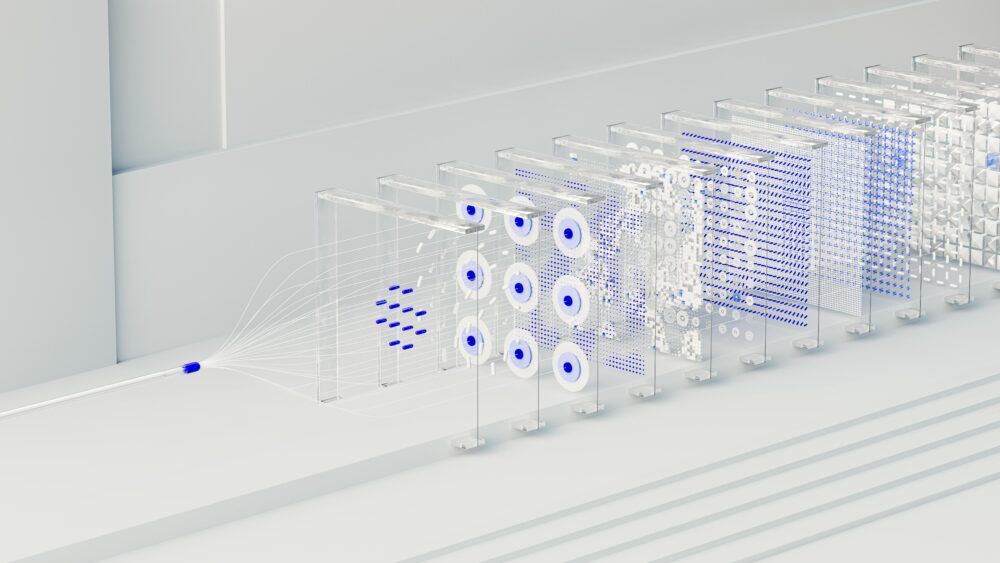
Continual AI revolutionizes machine learning by enabling systems to acquire new knowledge without forgetting previous learning. A technology that promises to make artificial intelligence more flexible and durable over time.
Imagine an artificial intelligence capable of learning continuously, just like humans do, without losing the skills acquired previously. This is the promise of Continual AI (Continual Learning), one of the most fascinating frontiers of modern artificial intelligence.
The Catastrophic Forgetting Problem
Traditional artificial intelligence systems suffer from a fundamental limitation: when trained on new data, they tend to completely “forget” what they had learned previously. This phenomenon, called catastrophic forgetting, represents one of the most significant challenges in the field of machine learning.
Continual AI addresses this problem by developing algorithms and architectures that allow models to integrate new knowledge while maintaining previous ones, creating a more natural and sustainable learning process.
Innovative Technologies and Approaches
There are several strategies for implementing continual learning:
- Elastic regularization: Techniques that protect important model parameters during learning of new tasks
- Dynamic architectures: Neural networks that can expand their structure to accommodate new knowledge
- Memory replay: Systems that maintain representative examples of previous tasks for periodic review
- Meta-learning: Algorithms that “learn to learn” by optimizing the knowledge acquisition process itself
Revolutionary Applications
Continual AI is finding applications in numerous sectors. In autonomous vehicles, it allows adaptation to new road conditions and regulations without losing basic driving skills. In medicine, it enables diagnostic systems to update with new pathologies while maintaining expertise on known ones.
In cybersecurity, continual AI allows recognition of new cyber threats while continuing to identify known ones. In virtual assistants, it enables learning user preferences and new features without forgetting previous ones.
Challenges and Future Prospects
Despite significant progress, Continual AI still faces several challenges. Memory management remains complex, as does balancing stability of acquired knowledge with plasticity for new learning.
However, the prospects are extremely promising. Researchers are exploring brain-inspired approaches, developing neuroplastic systems that could one day match our ability to learn throughout life.
Continual AI represents a fundamental step toward more robust, efficient, and biologically-similar artificial intelligence systems, paving the way for applications we can only imagine today.