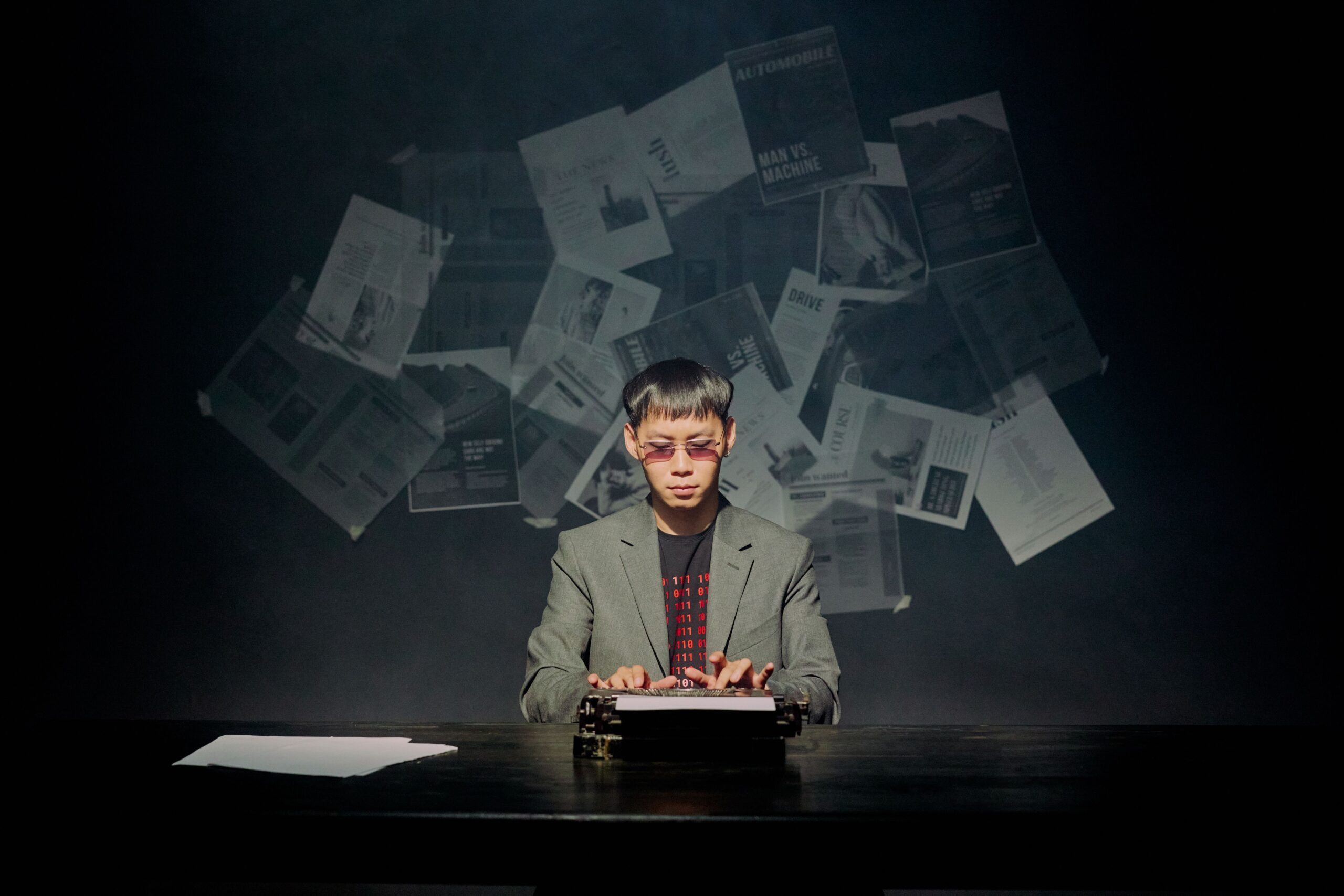
Generative AI is becoming a new writing companion for novelists, poets, and screenwriters, capable of suggesting plots, styles, and characters. But what does this mean for creative authenticity and the role of the human author?
For centuries, writing has been considered the most intimate and personal expression of human creativity. Today, however, generative artificial intelligence algorithms are fully entering the literary process, becoming tools capable of co-creating stories, poems, and even entire novels. This shift raises fascinating questions about what it truly means to “write” in the digital age.
State-of-the-art language models can analyze thousands of literary works, learning narrative patterns, rhetorical styles, and plot structures. Writers of all levels, from professionals to aspiring authors, use these tools not to replace their own voice, but to overcome creative block, explore dialogue variations, or quickly generate drafts to refine.
New Tools for an Ancient Craft
The practical applications of AI in creative writing are numerous and constantly evolving:
- Alternative plot generation: authors can ask AI to explore different narrative branches, discovering paths they might not have considered.
- Character development: algorithms capable of maintaining character consistency across hundreds of pages, suggesting authentic dialogue based on character psychology.
- Stylistic editing: tools that analyze prose rhythm, suggesting lexical variations or structural corrections without distorting the original voice.
- Creative translation: no longer simple linguistic transposition, but cultural adaptation that preserves poetic nuances and wordplay.
Publishing houses and self-publishing platforms are experimenting with hybrid workflows, where human intervention remains central but is supported by real-time algorithmic suggestions. Some literary festivals have even begun including categories dedicated to works co-created with artificial intelligence, opening a heated debate on the very definition of authorship.
Ethical and Creative Challenges
Criticisms are not lacking. The issue of copyright over texts used to train models remains unresolved in many jurisdictions, and several writers have filed lawsuits against tech companies, accusing them of using their works without consent. Furthermore, there is a risk of stylistic homogenization: if thousands of authors use the same tools, narratives might converge toward statistically predictable patterns, impoverishing the diversity of the world’s literary voice.
Some critics point out that true literature arises from lived experience, from pain, joy, and human contradictions that no algorithm can authentically replicate. AI, however sophisticated, has no autobiographical memory or awareness of its own existence: it can simulate emotion, but not feel it.
On the other hand, technology advocates argue that every innovation, from the typewriter to the spell checker, was initially met with suspicion before becoming an integral part of the creative process. AI might simply represent the next natural evolution of tools available to writers.
Toward a New Hybrid Narrative
The future of literature will likely not see AI replace human writers, but rather the emergence of new hybrid narrative forms, where artificial intelligence amplifies creativity rather than replacing it. What remains certain is that the relationship between author and machine is profoundly redefining how stories are imagined, written, and experienced by readers around the world.