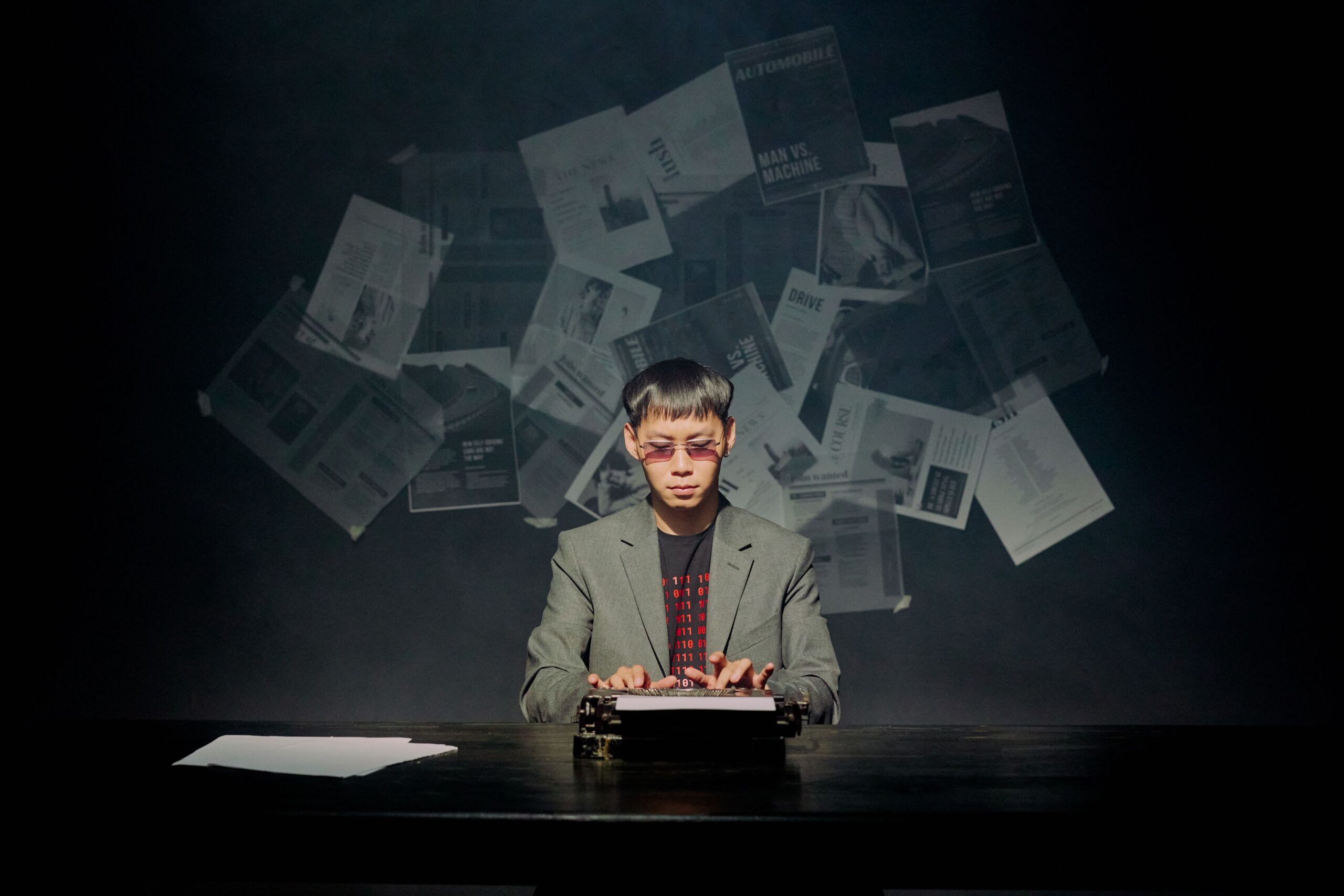
From AI-assisted novels to generative poetry, artificial intelligence is emerging as a new tool in writers’ toolkits. We explore how these technologies are transforming the creative process, editing, and publishing—not replacing the human voice, but amplifying it.
Writing has always been considered the last bastion of purely human expression, a territory where intuition, emotional memory, and personal experience intertwine in ways that seemed impossible to replicate artificially. Yet with the advent of advanced language models, artificial intelligence is decisively entering this field too, redefining what it means to ‘write’ in the twenty-first century.
Today, thousands of authors, both emerging and professional, use generative AI tools not to replace their own creativity, but to overcome writer’s block, generate initial drafts to rework, or explore narrative variants that would otherwise take weeks of work. This new paradigm is profoundly changing the relationship between author and text.
A New Kind of Collaboration
Writers who integrate AI into their workflow often speak of a symbiotic relationship rather than substitution. The algorithm becomes a tireless interlocutor, capable of proposing stylistic alternatives, suggesting plot developments, or even impersonating a character’s voice to test consistency throughout the novel.
- Generating drafts and narrative outlines to refine manually
- Brainstorming alternative plots and twists
- Simulating dialogues to test character voice
- Stylistic editing and narrative consistency suggestions
- Creative translation that preserves tone and rhythm of the original
Generative Poetry and New Languages
A particularly fascinating chapter concerns AI-generated poetry. Several experimental projects have demonstrated how language models can produce verses that, despite lacking lived experience, manage to evoke surprisingly evocative images and rhythms. This has opened a critical debate on the very concept of authorship: who is the author when a human writes the prompt and the machine composes the text?
Some contemporary poets have begun using AI as a declared co-author, publishing collections where algorithmic contribution is made explicit. This transparency is helping build new critical and aesthetic categories for evaluating hybrid works.
Publishing and Market Challenges
The publishing industry faces unprecedented questions. Publishing houses are developing guidelines to disclose AI use in manuscripts, while self-publishing platforms like Amazon have introduced specific policies for algorithmically generated content. The risk of market saturation with mass-produced, low-quality texts is real and is pushing toward new certification systems for creative authorship.
At the same time, new professions are emerging: the literary ‘prompt editor’, a hybrid figure between writer and technician, capable of guiding AI toward results stylistically consistent with the author’s vision.
Toward Augmented Writing
Rather than fearing replacement, many literary critics suggest thinking of this phase as ‘augmented writing’, where artificial intelligence amplifies human capabilities without erasing their uniqueness. Just as the typewriter didn’t eliminate literature but changed its production rhythms, AI could redefine the timing and methods of narrative creation, keeping intact the emotional core that only human experience can offer.
The real challenge for the future will be finding a balance that values technology as a tool for empowerment, while preserving the authenticity and authorial responsibility that have always defined the art of writing.