
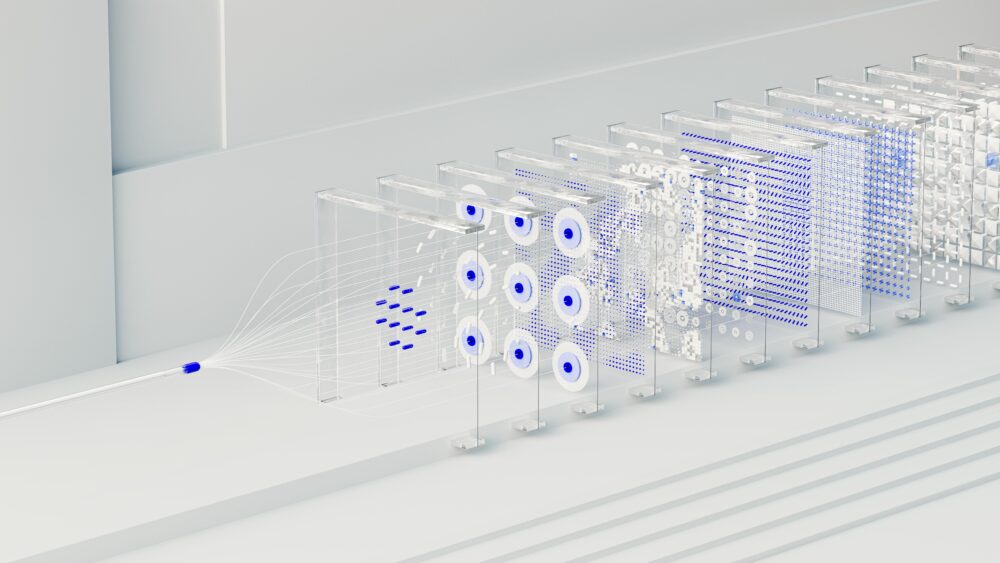
AI Edge Computing brings artificial intelligence directly to local devices, reducing latency and improving privacy. A revolution transforming smartphones, autonomous vehicles, and industrial IoT.
Artificial intelligence is undergoing a radical transformation: instead of processing everything in the cloud, it’s increasingly moving toward Edge Computing. This evolution brings AI directly to local devices, from our smartphones to autonomous cars, down to industrial sensors.
What is AI Edge Computing
AI Edge Computing involves running artificial intelligence algorithms directly on peripheral devices, without having to send data to remote servers. This revolutionary approach eliminates the need for constant internet connectivity and drastically reduces response times.
Unlike traditional cloud-based AI, Edge AI processes information locally, using specialized processors like NPUs (Neural Processing Units) and chips optimized for machine learning.
Key Advantages of Edge AI
- Ultra-Low Latency: Response times in milliseconds instead of seconds
- Enhanced Privacy: Sensitive data stays on the local device
- Reliability: Works even without internet connection
- Cost Reduction: Lower bandwidth and cloud service usage
- Energy Efficiency: Hardware-specific optimization
Revolutionary Applications
Edge AI is transforming numerous sectors. In smartphones, it enables features like instant facial recognition, real-time translation, and advanced computational photography. Autonomous vehicles use Edge AI for critical millisecond decisions, processing data from cameras and sensors without depending on connectivity.
In the industrial sector, Edge AI enables real-time predictive maintenance, automated quality control, and production process optimization. Smart home IoT devices become more intelligent and responsive, from voice assistants that understand offline commands to security systems that detect anomalies instantly.
Challenges and Limitations
Despite the advantages, Edge AI presents some challenges. The limited computational power of peripheral devices requires optimized and often simplified AI models. Model updates distributed across thousands of devices can be complex, and energy management remains critical for mobile devices.
The Future of Edge AI
The Edge AI market will grow exponentially in the coming years, driven by increasingly powerful and efficient processors. 5G networks will enable new hybrid applications combining Edge and Cloud AI, while integration with technologies like AR/VR will open previously unimaginable scenarios.
AI Edge Computing isn’t just a technological trend, but a fundamental transformation that will make artificial intelligence more accessible, faster, and privacy-respectful, truly putting it in our hands.