
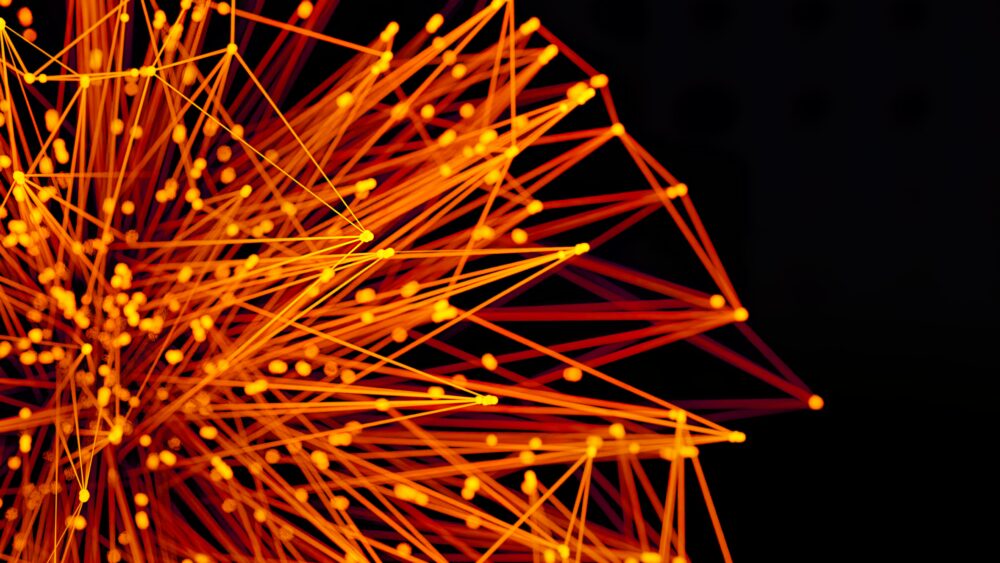
AI Swarm Intelligence draws inspiration from the collective behavior of insects and animals to create distributed artificial intelligence systems. This emerging technology promises to revolutionize optimization, robotics, and complex problem-solving through multi-agent collaboration.
Artificial intelligence continues to evolve by drawing inspiration from nature’s wonders. One of the most fascinating frontiers is Swarm Intelligence, which replicates the coordination and collaboration mechanisms observed in insect swarms, bird flocks, and fish schools.
Understanding Swarm Intelligence
Swarm Intelligence is an artificial intelligence paradigm that uses multi-agent systems to solve complex problems through distributed collaboration. Each individual agent follows simple rules, but collective interaction generates emergent intelligent behaviors that exceed the capabilities of individual components.
This approach is based on fundamental principles observed in nature: self-organization, indirect communication through the environment, and emergent behavior from bottom to top.
Key Algorithms and Techniques
- Particle Swarm Optimization (PSO): Inspired by coordinated flock movement, optimizes solutions through information sharing between virtual particles
- Ant Colony Optimization (ACO): Replicates ant foraging behavior, using digital pheromone trails to find optimal paths
- Artificial Bee Colony (ABC): Simulates bee nectar-searching processes to solve numerical optimization problems
- Fish School Search: Models collective behavior of fish schools for solution space exploration
Revolutionary Applications
Swarm Intelligence is finding innovative applications across various sectors. In distributed robotics, drone swarms collaborate for search and rescue missions, environmental monitoring, and automated deliveries. In smart transportation, swarm algorithms optimize urban traffic flows and coordinate autonomous vehicles.
In cybersecurity, swarm systems detect threats through collaborative network pattern analysis, while in industrial optimization, they coordinate complex production chains and manage distributed resources.
Advantages and Future Challenges
Key advantages of Swarm Intelligence include robustness to individual failures, scalability for large-scale systems, and dynamic adaptation capabilities to changing conditions. However, challenges include managing agent communication, controlling emergence of undesired behaviors, and optimizing computational performance.
The future of Swarm Intelligence looks rich with innovations, featuring developments toward hybrid systems combining machine learning and swarm behaviors, smart cities and Internet of Things applications, and new architectures for distributed computing. This technology represents a significant step toward more resilient, efficient, and naturally intelligent AI systems.