
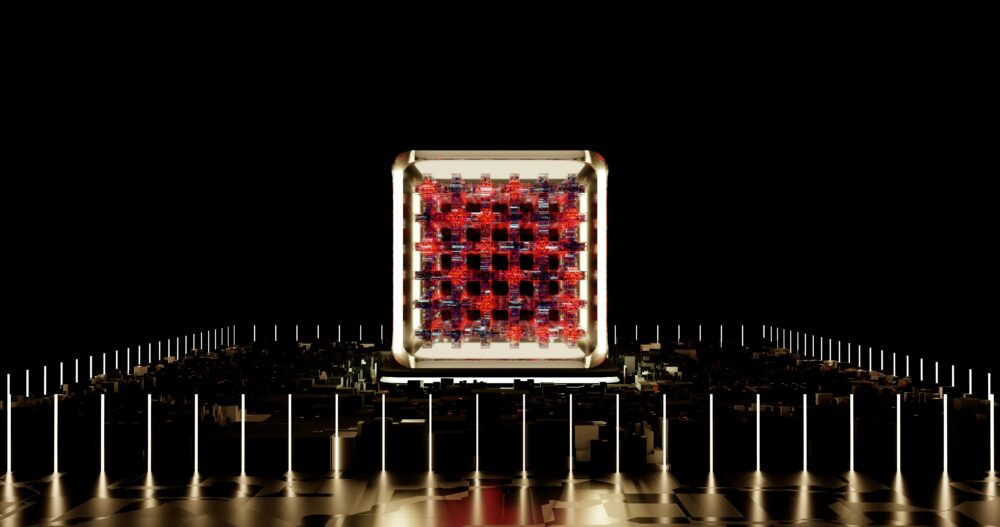
Quantum computing is revolutionizing artificial intelligence, promising to overcome current limitations of classical processing. This technological convergence opens unprecedented scenarios for solving complex problems in unthinkable timeframes.
The convergence between quantum computing and artificial intelligence represents one of the most promising frontiers in modern technology. While traditional AI operates through classical bits that assume values of 0 or 1, quantum computers utilize qubits, capable of existing in superposition states that enable parallel computations on an exponential scale.
The Potential of Quantum Machine Learning
Quantum machine learning promises to radically transform how machine learning algorithms process information. The main advantages include:
- Exponential acceleration: Some quantum algorithms can solve specific optimization problems thousands of times faster than classical computers
- Massive dataset processing: The ability to simultaneously process enormous amounts of data through quantum superposition
- Complex pattern recognition: Identification of hidden correlations in multidimensional data structures
Concrete Applications in Development
Leading technology companies are already experimenting with concrete Quantum AI applications. IBM, Google, and Microsoft have developed cloud platforms for quantum computing, allowing researchers to test hybrid algorithms. In the pharmaceutical sector, drug discovery benefits from quantum simulation of molecular interactions, reducing development times from years to months.
In finance, quantum algorithms are revolutionizing risk analysis and investment portfolio optimization. JPMorgan Chase and Goldman Sachs have heavily invested in this technology to improve their predictive capabilities in financial markets.
Current Technological Challenges
Despite the promises, Quantum AI faces significant challenges. Quantum decoherence remains the primary obstacle: qubits rapidly lose their superposition due to environmental interference. Additionally, quantum error correction requires hundreds of physical qubits for each functional logical qubit.
Current quantum computers operate under extreme conditions, requiring temperatures near absolute zero and perfect electromagnetic isolation. This limits their practical application to specialized contexts.
The Future of Quantum Convergence
Experts predict that within the next decade we will see the first significant commercial advantages of Quantum AI. The most promising areas include cryptography, chemical simulation, logistics optimization, and financial modeling. The real revolution will arrive when fault-tolerant quantum computers become reality, opening possibilities today unimaginable for artificial intelligence.