From autonomous rovers on Mars to self-diagnosing satellites, AI is becoming the indispensable copilot of space exploration. Discover how algorithms are accelerating missions, cutting costs, and paving the way for a future of interplanetary colonization.
Space exploration has always represented the ultimate frontier of human ingenuity, but today a new protagonist is redefining the rules of the game: artificial intelligence. From government space agencies to private startups, AI is proving to be an essential tool for tackling the extreme challenges of space, where communication latency and hostile environments make constant real-time human control impossible.
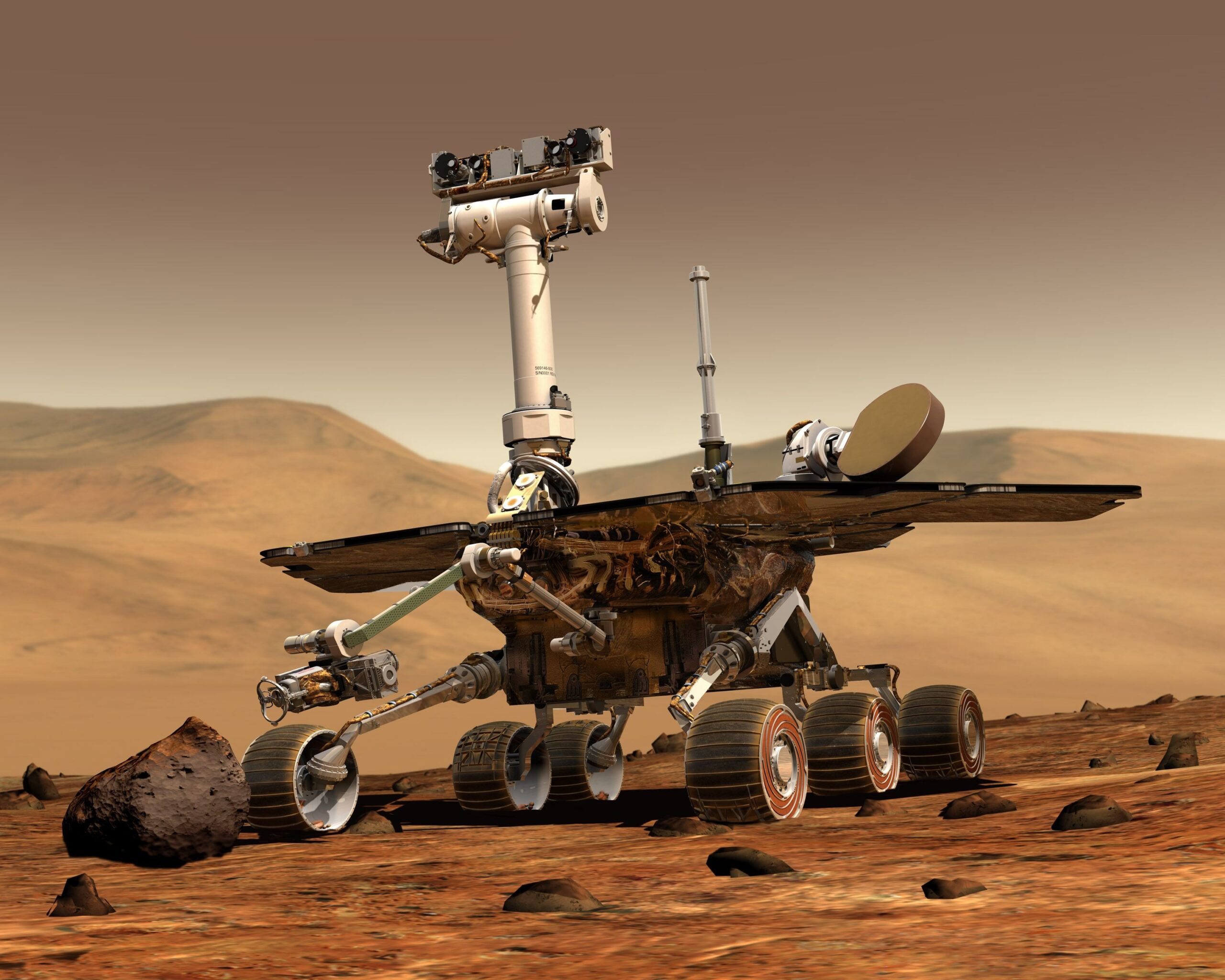
One of the most promising areas is autonomous extraterrestrial vehicles. NASA’s Martian rovers, like Perseverance, use computer vision systems to navigate unknown terrain, identify obstacles, and even autonomously select scientifically interesting rock samples, without waiting for instructions from Earth that would take precious minutes to arrive.
Satellite Diagnostics and Predictive Maintenance
Modern satellites are equipped with machine learning algorithms capable of constantly monitoring their own health status. These systems can predict failures before they occur, optimize energy consumption, and even autonomously reconfigure their systems in case of anomalies, drastically reducing the need for human intervention from the ground.
- Early detection of malfunctions through pattern recognition
- Automatic optimization of orbital trajectories
- Intelligent management of available solar energy
- Prioritized communication of the most relevant data
AI in the Search for Exoplanets
Deep learning algorithms are also revolutionizing observational astronomy. Telescopes like Kepler and TESS generate enormous amounts of data that would be impossible to analyze manually. Neural networks trained on thousands of stellar light curves can identify subtle patterns indicating the presence of transiting planets, discovering worlds that would otherwise go unnoticed.
These systems don’t just detect exoplanets, they automatically classify them based on habitability probability, analyzing factors such as distance from the host star, estimated atmospheric composition, and orbital characteristics.
Toward Autonomous Human Missions
As human missions to Mars approach, AI will play a crucial role in supporting astronauts in environments where support from Earth will be limited by communication delays of up to 20 minutes. Onboard artificial intelligence systems will need to manage autonomous medical diagnosis, environmental control of habitats, and even psychological support to cope with extreme isolation.
Space agencies are developing AI assistants capable of learning from interactions with astronauts, personalizing their behavior to provide emotional as well as technical support during long-duration missions.
The Challenges Still Open
Despite extraordinary progress, significant challenges remain. Algorithms must operate with limited computational resources, in conditions of cosmic radiation that can damage hardware, and with near-zero margins for error when human lives are at stake. Validating and certifying AI systems for space missions requires extremely rigorous safety standards.
The future of space exploration will increasingly be a dialogue between human creativity and artificial computational capability. As we prepare to become a multiplanetary species, artificial intelligence will not just be a tool, but a true travel companion, capable of making critical decisions in moments when distance from Earth makes any other kind of support impossible. This synergy between humans and machines could be the key to transforming dreams of space colonization into concrete reality in the coming decades.