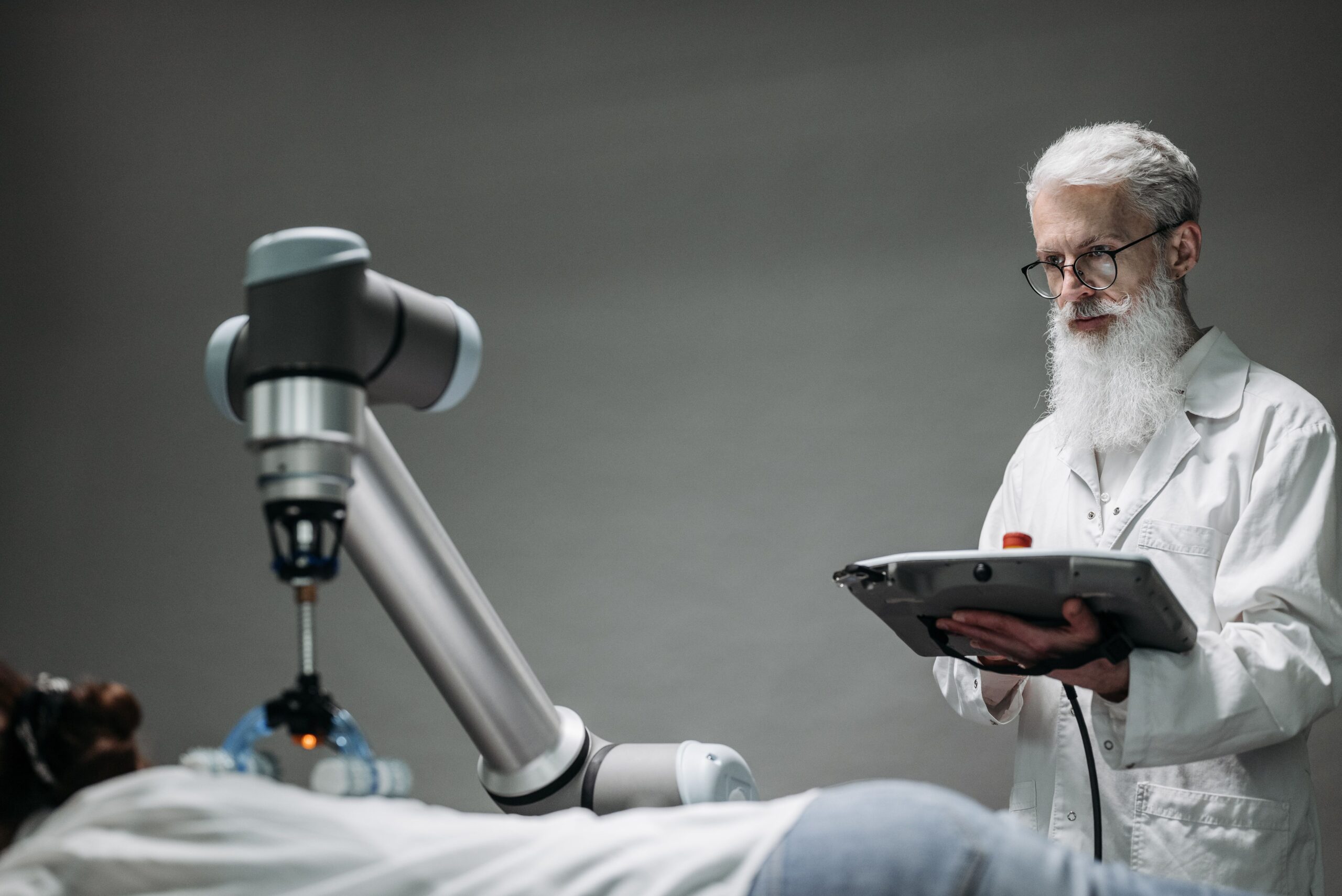
AI is transforming modern medicine, from early disease diagnosis to new drug discovery. Let’s explore how algorithms are becoming indispensable allies for doctors and researchers worldwide.
Medicine is undergoing a quiet but profound transformation driven by artificial intelligence. This is no longer science fiction: today, sophisticated algorithms analyze diagnostic images, predict disease onset, and accelerate the discovery of new drugs with a precision that seemed unimaginable just a few years ago.
Image Diagnosis: Increasingly Precise Artificial Eyes
One area where AI has already demonstrated concrete impact is radiology. Deep learning systems can analyze CT scans, MRIs, and mammograms, identifying anomalies invisible to the human eye, often in record time. Some algorithms have reached accuracy levels comparable to, and in certain cases superior to, those of experienced radiologists in early tumor detection, reducing diagnostic error margins and enabling more timely interventions.
Drug Discovery: From Laboratories to Supercomputers
The traditional process of developing a new drug can take over ten years and billions of euros in investment. AI is drastically compressing these timelines. Through predictive models capable of simulating interactions between molecules and target proteins, researchers can identify promising compounds in weeks rather than years. The most emblematic case is AlphaFold, the system developed by DeepMind capable of predicting the three-dimensional structure of proteins, a result that has opened new paths in designing targeted therapies against genetic and infectious diseases.
Personalized Medicine and Continuous Monitoring
Thanks to the analysis of large amounts of genomic, clinical, and behavioral data, AI enables the construction of personalized risk models for each patient. This means tailored therapies, calibrated not only to the pathology but to the individual’s specific biological profile. At the same time, wearable devices equipped with smart sensors monitor vital parameters in real time, promptly signaling cardiac, glycemic, or respiratory anomalies before they become emergencies.
- Predictive analysis for early identification of chronic conditions
- Virtual assistants supporting patients in therapy management
- AI-assisted robotic surgery for high-precision minimally invasive procedures
- Smart triage systems in emergency rooms to optimize care priorities
- Epidemiological data analysis for epidemic prediction and containment
Ethical and Regulatory Challenges
Despite these extraordinary advances, integrating AI into medicine raises important questions. Protecting healthcare data privacy, ensuring transparency in decision-making algorithms, and avoiding bias in training datasets are central themes in the current debate. An algorithm trained on data not representative of all populations risks generating less accurate diagnoses for certain ethnic or demographic groups, amplifying existing inequalities in the healthcare system.
The Future of AI-Augmented Healthcare
The future does not envision machines replacing doctors, but rather an increasingly close collaboration between human and artificial intelligence. Healthcare professionals will continue to be irreplaceable in empathetic patient relationships and complex clinical decisions, but they will be able to rely on increasingly powerful tools to support their assessments. The challenge for coming years will be ensuring this technological revolution is accessible to everyone, overcoming the economic and infrastructural disparities that still limit access to advanced care in many parts of the world.