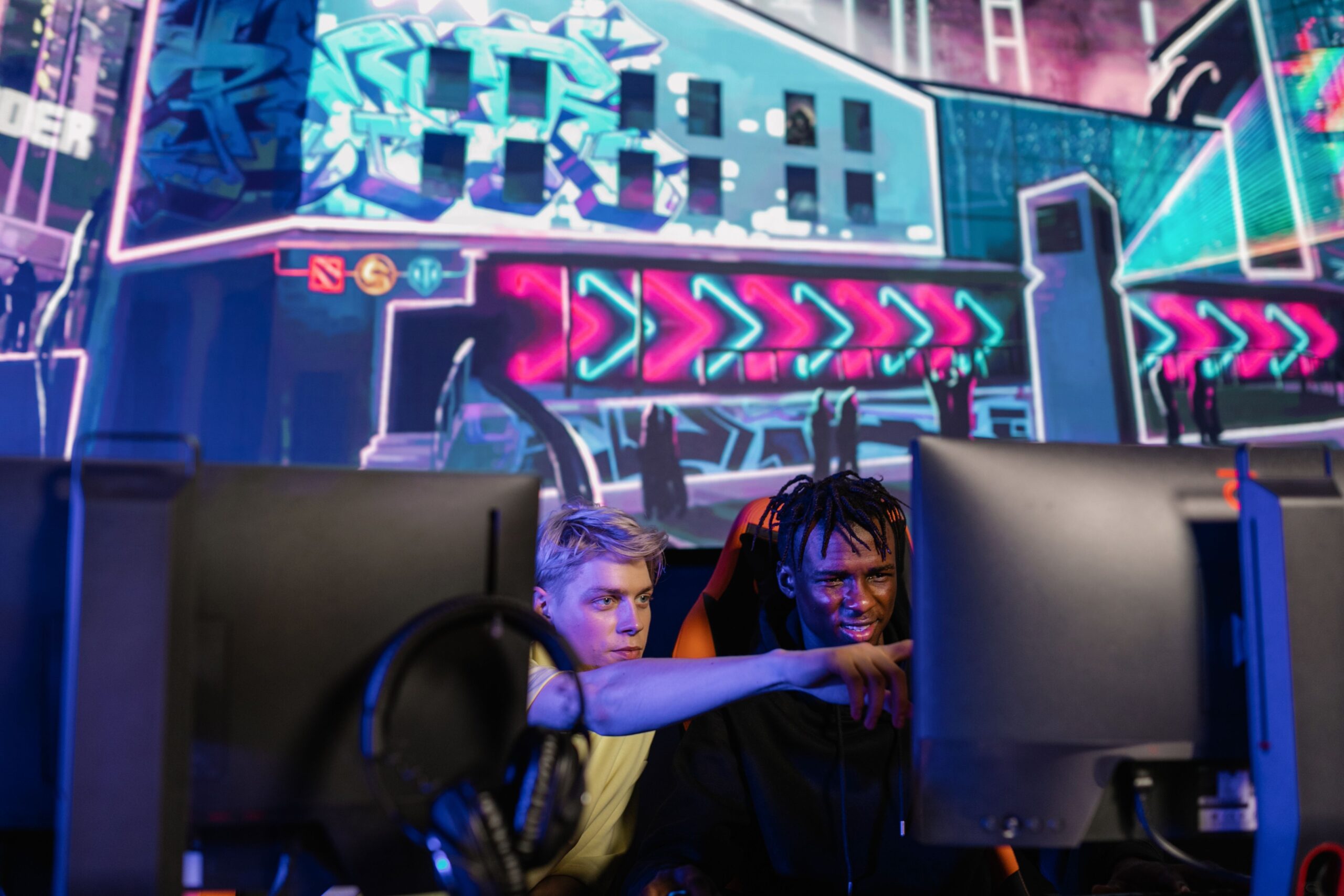
AI is transforming the gaming industry, from procedural generation of vast worlds to NPCs capable of realistic and unpredictable behavior. A journey through technology and creativity that is redefining how we play and create games.
The world of video games has always been fertile ground for technological experimentation, and today artificial intelligence is driving one of the deepest transformations in the medium’s history. It’s no longer just about smarter enemies or tougher challenges: AI is redefining the creative process itself, allowing worlds, stories, and characters to be generated in ways unimaginable just a few years ago.
One of the most fascinating areas is procedural generation enhanced by machine learning. Games with vast worlds, once built entirely by hand by teams of level designers, can now be algorithmically generated, ensuring infinite variety while drastically reducing development time. AI analyzes aesthetic patterns, game design rules, and player preferences to create coherent and engaging environments.
Non-player characters that learn
Traditional NPCs, often limited to scripted and repetitive behaviors, are evolving thanks to generative AI systems and reinforcement learning. These characters can now:
- Adapt their strategies based on player actions
- Generate dynamic, contextual dialogue instead of pre-recorded lines
- Develop emergent behaviors not anticipated by developers
- Remember past interactions with the player, creating persistent relationships
Some independent studios are already experimenting with language models integrated directly into game engines, allowing free-form conversations with virtual characters and opening up entirely new narrative scenarios.
AI as a tool for independent developers
While producing graphic assets, animations, and music once required large teams and substantial budgets, generative AI tools are now democratizing game development. Small independent studios can generate textures, preliminary 3D models, sound effects, and even original soundtracks with technological support once reserved only for major productions.
This doesn’t mean replacing human creativity, but amplifying it: designers can focus on the most meaningful artistic and narrative choices, delegating repetitive or exploratory tasks to AI, such as generating multiple variants of a character or environment from which to select the best solution.
Ethical and creative challenges
Naturally, this revolution brings important questions. How much creative control should human developers retain? How is artists’ work protected when AI can generate content similar to their style? And above all, how do we balance technological efficiency with the artistic authenticity that makes a game memorable?
Many studios are answering these questions by adopting a hybrid approach: AI as a tool for support and inspiration, not as a substitute for human creative process. The most interesting results come precisely from the collaboration between artistic intuition and computational power.
Looking to the future, it’s likely that video games will become increasingly personalized, with experiences that adapt in real time to play style, narrative preferences, and even the player’s emotional state. Artificial intelligence isn’t just changing how games are created, but is redefining what it means to play, turning every session into a potentially unique and unrepeatable experience.