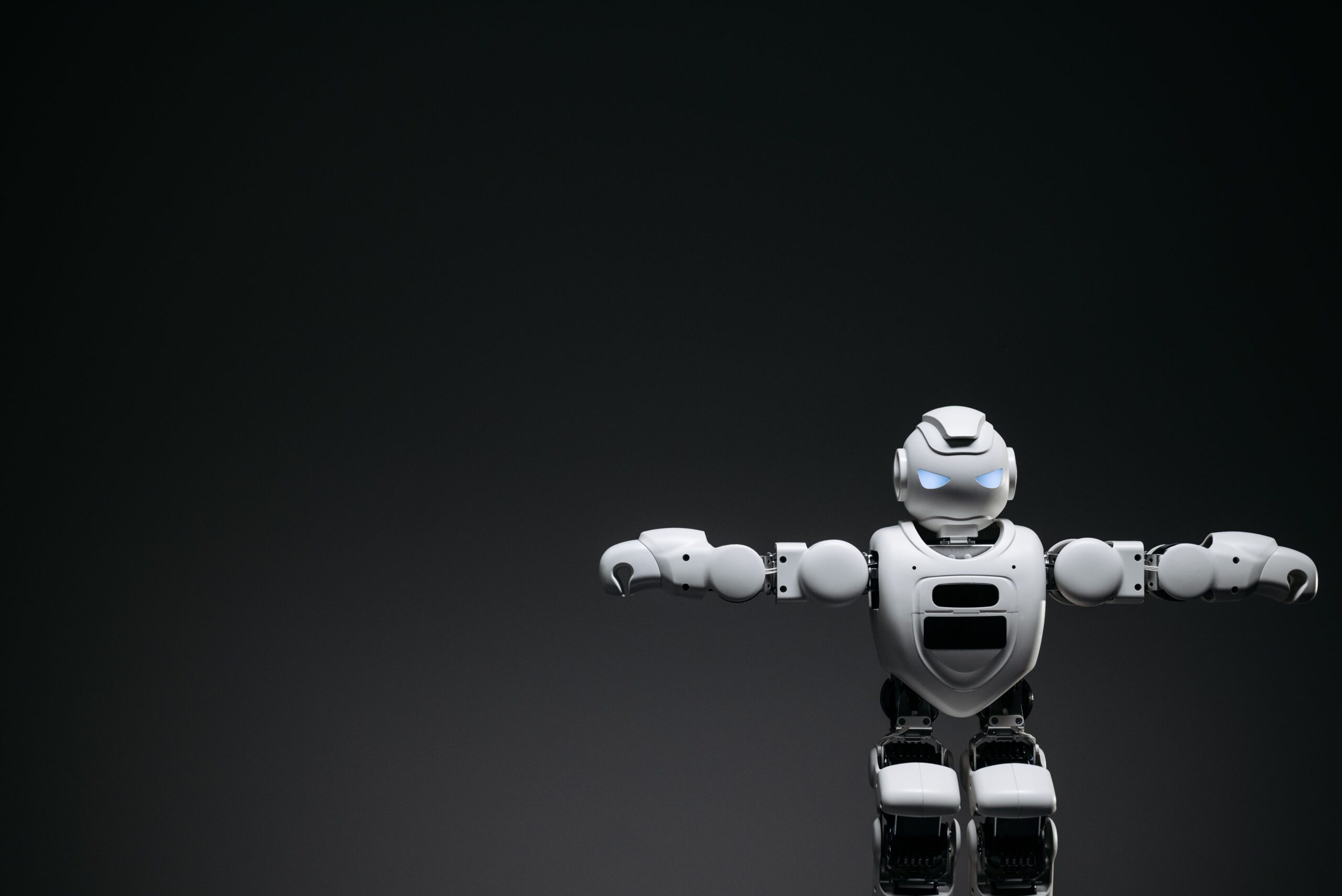
AI is making the leap from the digital world to the physical one, merging with advanced robotics to create systems capable of perceiving, moving, and acting in real space. This convergence, known as ‘physical AI’, promises to transform factories, homes, and cities over the next decade.
For years, artificial intelligence has lived mostly inside screens: chatbots, recommendation algorithms, text and image generators. But a new frontier is rapidly opening up, that of physical AI, artificial intelligence embodied in mechanical bodies capable of perceiving the environment, making decisions, and acting physically in the real world. It’s no longer just about predicting the next word in a sentence, but calculating the next trajectory of a robotic arm or the next step of a mechanical leg.
This shift is made possible by the convergence of three key technologies: increasingly efficient deep learning models, advanced sensors (vision, touch, proprioception), and cheaper, more versatile robotic hardware. The result is machines that no longer simply execute pre-programmed instructions, but learn complex behaviors by observing human demonstrations or virtual simulations.
From Simulation to the Real World
One of robotics’ historical obstacles has always been the so-called ‘sim-to-real gap’: a robot trained in a virtual environment often struggles to adapt to the imperfections and unpredictability of the real world. Today, thanks to reinforcement learning techniques and increasingly realistic physics simulators, this gap is shrinking dramatically. Companies are training models on millions of virtual scenarios before transferring them to physical hardware, greatly accelerating development timelines.
Industries Set to Transform
- Manufacturing: collaborative robots able to adapt to variable tasks without manual reprogramming
- Logistics: autonomous warehouse systems that recognize previously unseen objects and manipulate them correctly
- Home assistance: robots capable of performing complex household tasks, from folding clothes to preparing simple meals
- Healthcare: robotic devices assisting the elderly and people with disabilities in daily activities
- Exploration: autonomous machines for dangerous or inaccessible environments, such as mines or ocean floors
A crucial element of this revolution is the emergence of so-called robotic ‘foundation models’: neural networks trained on massive multimodal datasets that include video, text, and sensory data, later able to generalize behaviors to tasks never seen before. It’s the robotic equivalent of what large language models have done for text.
The Challenges That Remain
Despite the progress, significant obstacles remain. Safety is an absolute priority: an algorithm that gives a wrong text answer is an annoyance, but a robot that makes a physical mistake can cause real harm. This requires extremely robust verification and control systems, as well as clear regulations on liability in case of accidents.
Costs also remain high: high-quality sensors, precise actuators, and onboard computing power come at a price that still makes mass adoption difficult. However, the cost trajectory seen in digital technology suggests this barrier could drop quickly in the coming years.
Looking ahead, many experts believe physical AI represents the next great wave of innovation after large language models. If the last decade was defined by intelligence that understands and generates language, the next one may be defined by intelligence that understands and reshapes the physical space around us, redrawing the relationship between humans, machines, and environment.