
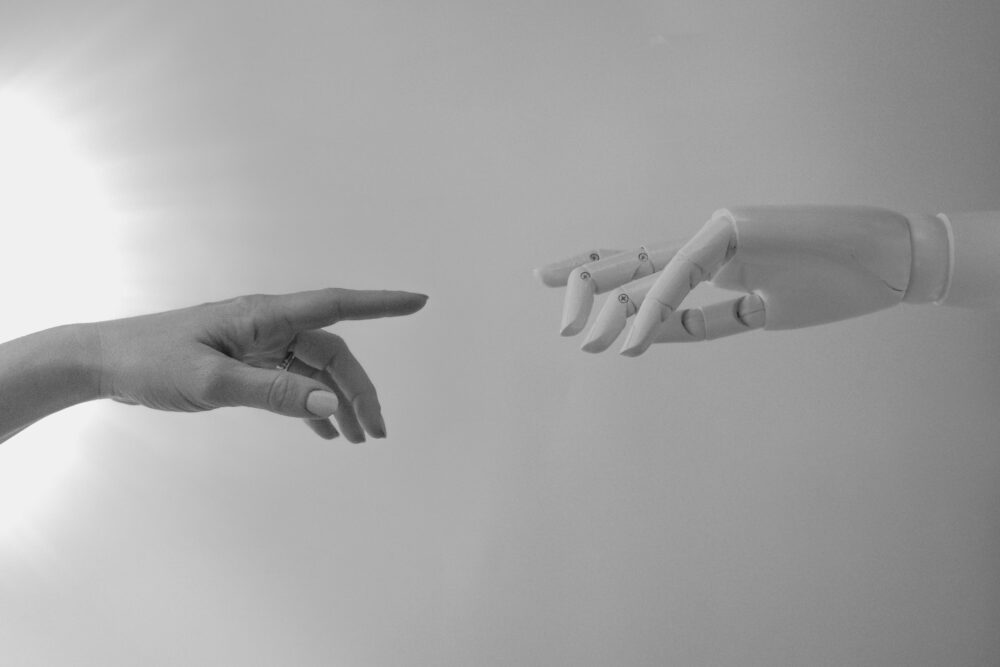
Collaborative AI represents the future of human-machine interaction, where artificial intelligence doesn’t replace but enhances human capabilities. This new frontier is redefining how we work and create together.
Collaborative artificial intelligence represents a groundbreaking shift in the contemporary technological landscape. Unlike traditional AI systems designed to automate specific tasks, collaborative AI is conceived to work side by side with humans, combining human intuition and creativity with the computational power of machines.
Core Features of Collaborative AI
This evolved form of artificial intelligence distinguishes itself through several innovative characteristics. First, advanced contextual understanding that allows systems to interpret not only what we say, but also the context in which we operate. Second, the ability to continuously learn from human interactions, constantly improving the quality of collaboration.
- Intuitive interfaces that adapt to user work styles
- Bidirectional feedback systems for mutual improvement
- Capability to handle ambiguity and uncertainty typical of human work
- Seamless integration with existing workflows
Revolutionary Applications
In the medical sector, collaborative AI is transforming diagnostics. Radiologists work with AI systems that highlight potential anomalies, allowing doctors to focus on more complex analyses and critical clinical decisions. This synergy has demonstrated a 25% increase in diagnostic accuracy compared to individual work.
In scientific research, teams of researchers collaborate with AI to analyze enormous datasets, identify hidden patterns, and generate innovative hypotheses. An emblematic example is drug discovery, where AI accelerates the identification of promising compounds while researchers guide strategy and interpret biological results.
Workplace Transformation
Collaborative AI is also revolutionizing traditional work environments. In law firms, lawyers and AI work together to analyze contracts and legal precedents, with AI handling document research while professionals focus on strategy and legal interpretation.
In the creative sector, designers and AI collaborate to generate innovative concepts. AI proposes variations and alternatives based on specific parameters, while designers maintain creative control and final artistic vision.
Future Challenges and Opportunities
Implementing collaborative AI presents significant challenges. Mutual trust between humans and AI systems requires time and shared experience. It’s essential to develop transparent systems that explain their decisions and recommendations.
Training collaborative skills represents another crucial challenge. Professionals must learn not only to use AI tools, but to collaborate effectively with artificial intelligences, developing new forms of communication and coordination.
Toward an Integrated Future
The evolution toward collaborative AI marks the beginning of a new era where the distinction between human and artificial intelligence becomes increasingly blurred. It’s not about replacing humans with machines, but creating hybrid ecosystems where both contribute with their unique strengths.
This collaboration promises to unlock levels of innovation and productivity previously impossible, paving the way for revolutionary scientific discoveries, innovative creative solutions, and a future where technology and humanity progress together toward common goals.