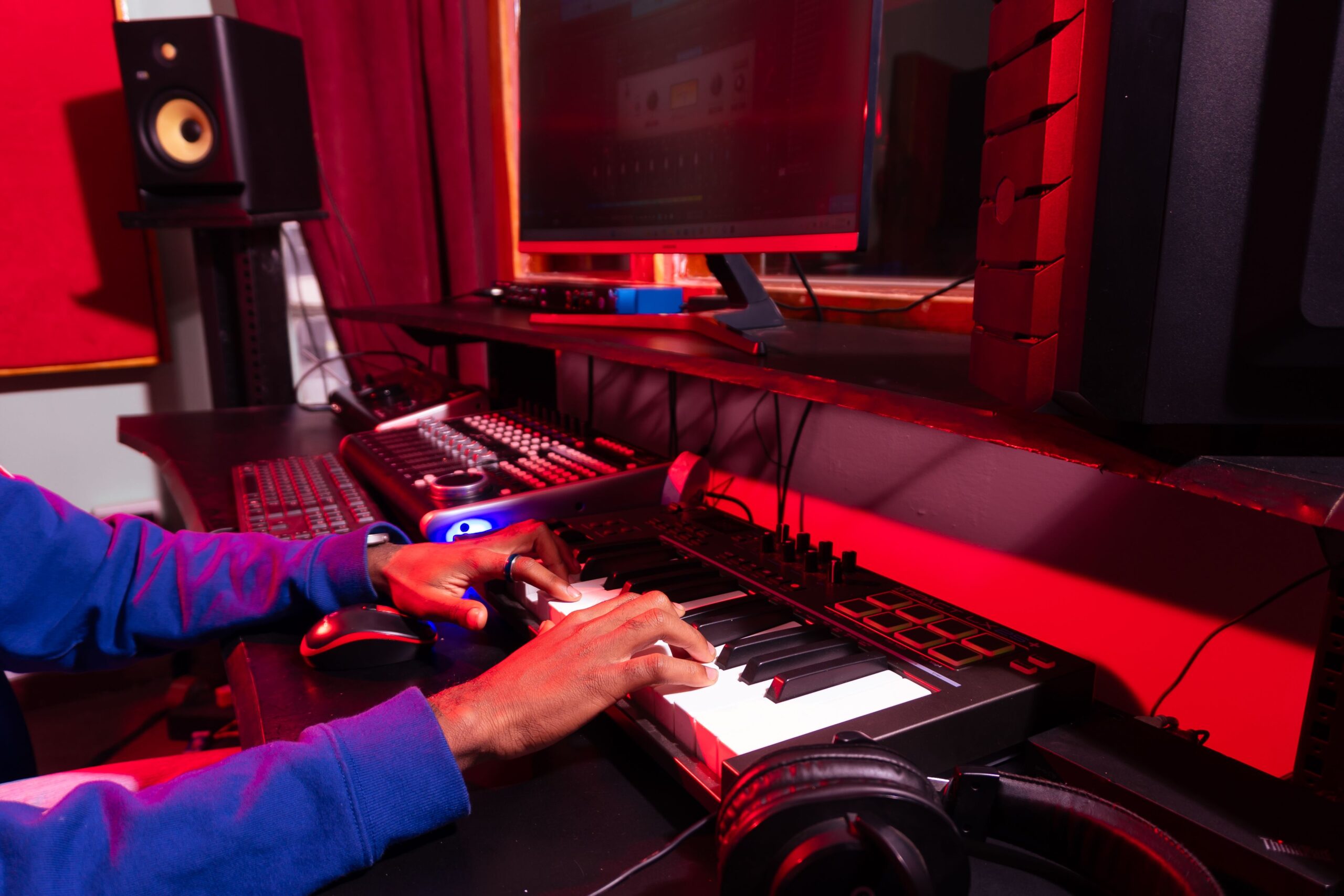
From automatic composition to AI-assisted music production, artificial intelligence is transforming how music is created, produced, and distributed. A journey through innovative tools, opportunities for artists, and new ethical questions about the very concept of musical creativity.
Music, long considered one of the most intimate and human expressions of creativity, is undergoing a radical transformation thanks to artificial intelligence. Algorithms capable of composing melodies, generating complex arrangements, and even imitating the style of famous artists are redefining the boundaries of music production, opening scenarios that until a few years ago belonged to science fiction.
Tools like Google’s MusicLM, AIVA, and Suno have demonstrated that neural networks can generate musical pieces starting from simple text descriptions or reference audio samples. These systems analyze enormous databases of existing compositions, learning harmonic, rhythmic, and melodic patterns that they then recombine in original ways, producing results ranging from classical music to electronic, from jazz to contemporary pop.
New Tools for Musicians and Producers
The impact of AI on the music industry is not limited to the automatic generation of complete tracks. Many professionals use it as a creative assistant to overcome the classic artist’s block or to explore new sonic directions. Among the most widespread applications are:
- Generation of custom instrumental backing tracks and chord progressions
- Automatic mastering that optimizes sound for different streaming platforms
- Audio track separation for remixes and sampling
- Realistic voice synthesis for demos and independent productions
- Compositional suggestions based on the artist’s personal style
These technologies are democratizing access to professional music production, allowing even those without technical training to create high-quality tracks with minimal investment.
The Debate on Authenticity and Copyright
However, controversies are not lacking. When an algorithm composes a piece inspired by the style of an existing artist, who owns the creative authorship? Record labels and copyright protection organizations are facing complex legal issues, while some musicians see AI as a threat to their artistic uniqueness.
At the same time, artists like Holly Herndon have embraced artificial intelligence as a creative collaborator, creating projects that explore precisely the boundary between human and algorithmic composition, transforming technology into the very subject matter of the artwork.
Live AI: Performance and Interactivity
A particularly fascinating area is that of live performances enhanced by artificial intelligence. Systems capable of generating visualizations synchronized with music, or even improvising in real time alongside musicians, are creating new hybrid forms of spectacle between human and machine. Music festivals around the world are beginning to include sets where AI becomes a genuine co-protagonist of the sonic experience.
The film and video game soundtrack industry is also experimenting with AI to generate adaptive music that dynamically responds to player actions or scene emotions, creating increasingly immersive and personalized experiences.
Toward a New Definition of Musical Creativity
Rather than replacing musicians, artificial intelligence seems destined to redefine their role, transforming them into curators and creative directors of complex generative processes. The challenge for the future will be finding a balance between technological innovation and the preservation of artistic authenticity, ensuring that technology amplifies, rather than replaces, the unique voice of each composer.