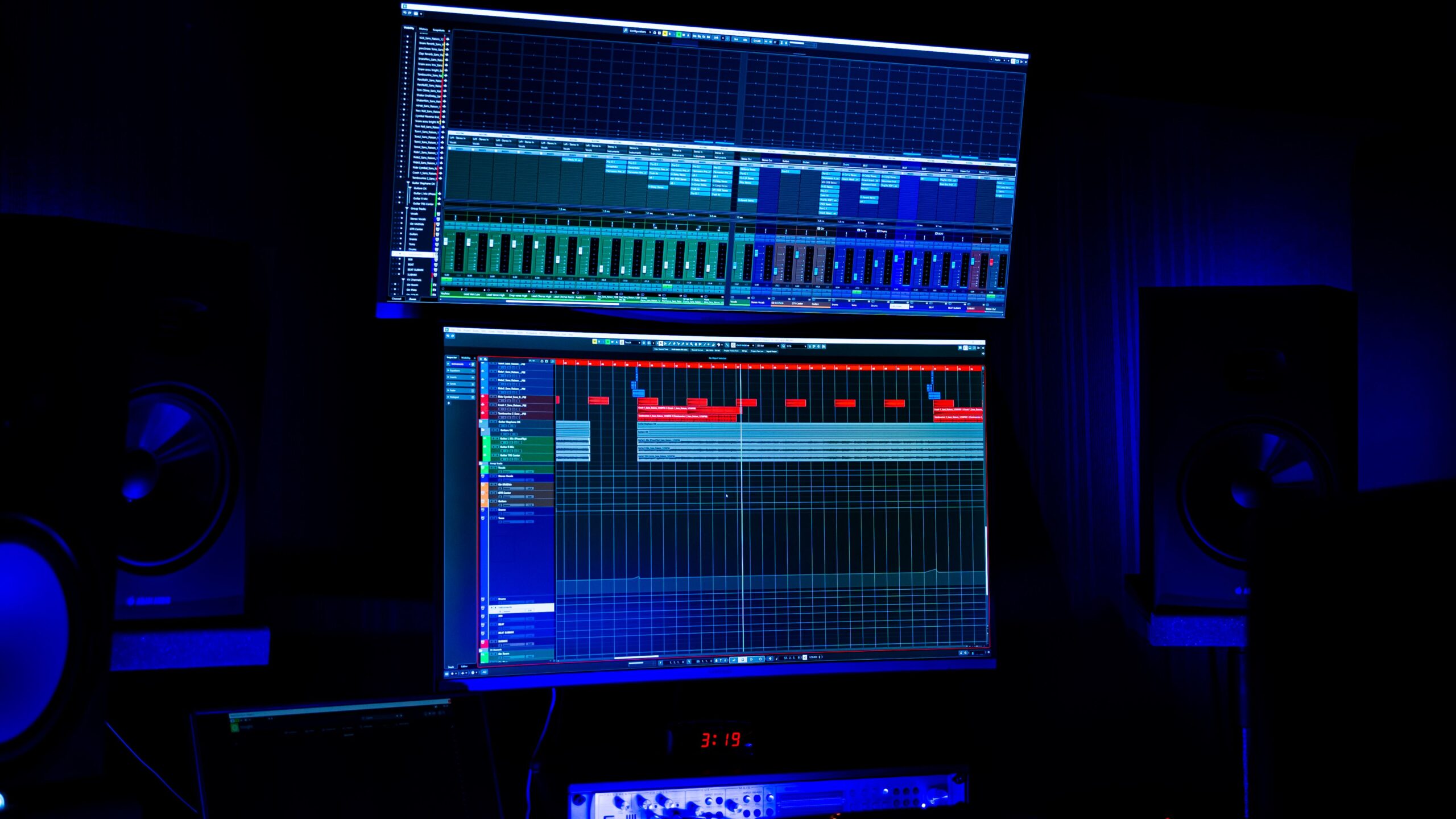
AI is transforming every stage of the music chain, from automatic composition to intelligent mastering, all the way to personalized listening. A journey through creative tools and the ethical questions surrounding copyright.
Music has always been one of the most fascinating territories where artificial intelligence is leaving its mark. This is not just about personalized playlists: today algorithms compose melodies, arrange complete tracks, master recordings, and even generate synthetic voices indistinguishable from human ones. This silent revolution is reshaping the relationship between artists, producers, and listeners.
From Automatic Composition to Custom Soundtracks
Tools like AIVA, Amper Music, and Soundraw allow users to generate original tracks starting from simple parameters: genre, mood, duration, instrumentation. These systems analyze thousands of existing compositions to learn harmonic and rhythmic patterns, then produce new music consistent with the requested style. The sector that benefits most is soundtracks for videos, podcasts, and advertising content, where royalty-free tracks are needed quickly and at low cost.
Even professional composers use AI as an ideation tool: they generate musical drafts that are then refined with their own artistic touch, dramatically accelerating the creative process.
Intelligent Production and Mastering
In the production phase, AI has democratized access to techniques once reserved for professional studios. Platforms like LANDR use machine learning to analyze a track and automatically apply equalization, compression, and dynamic balancing, delivering a professional-quality master in just minutes. This has allowed independent musicians to compete with major label productions without large budgets.
- Automatic separation of audio tracks (vocals, drums, bass) from an already finalized mix
- Generation of stems for remixing thanks to specialized neural networks
- Pitch and timing correction with millimetric precision
- Voice synthesis that replicates specific timbres, opening up new and controversial scenarios
Personalized Listening
On the consumption side, platforms like Spotify and Apple Music use recommendation systems based on neural networks that analyze not only declared preferences but also subtle behavioral patterns: listening time, presumed mood, social context. The goal is to create an increasingly tailored experience, capable of anticipating user desires before they are even expressed.
Ethical Issues and Copyright
This technological revolution brings complex questions with it. Who holds the rights to a track composed by an artificial intelligence trained on thousands of copyrighted works? Several lawsuits are already underway against companies that used music catalogs without authorization to train their models. At the same time, concern is growing over unauthorized voice synthesis, capable of cloning celebrity artists’ voices to create songs they never actually sang.
Many labels and trade associations are pushing for stricter regulations, while some artists are choosing to actively collaborate with these technologies, integrating them into their creative process as a new expressive tool.
A Tool, Not a Replacement
Despite extraordinary progress, most experts agree on one point: AI music works best as an amplifier of human creativity rather than a substitute. The ability to convey authentic emotions, to tell personal stories through sound, remains a prerogative that is difficult to replicate artificially. The most likely future is therefore one of increasingly close collaboration between musicians and algorithms, where technology expands creative possibilities without replacing the soul of art.