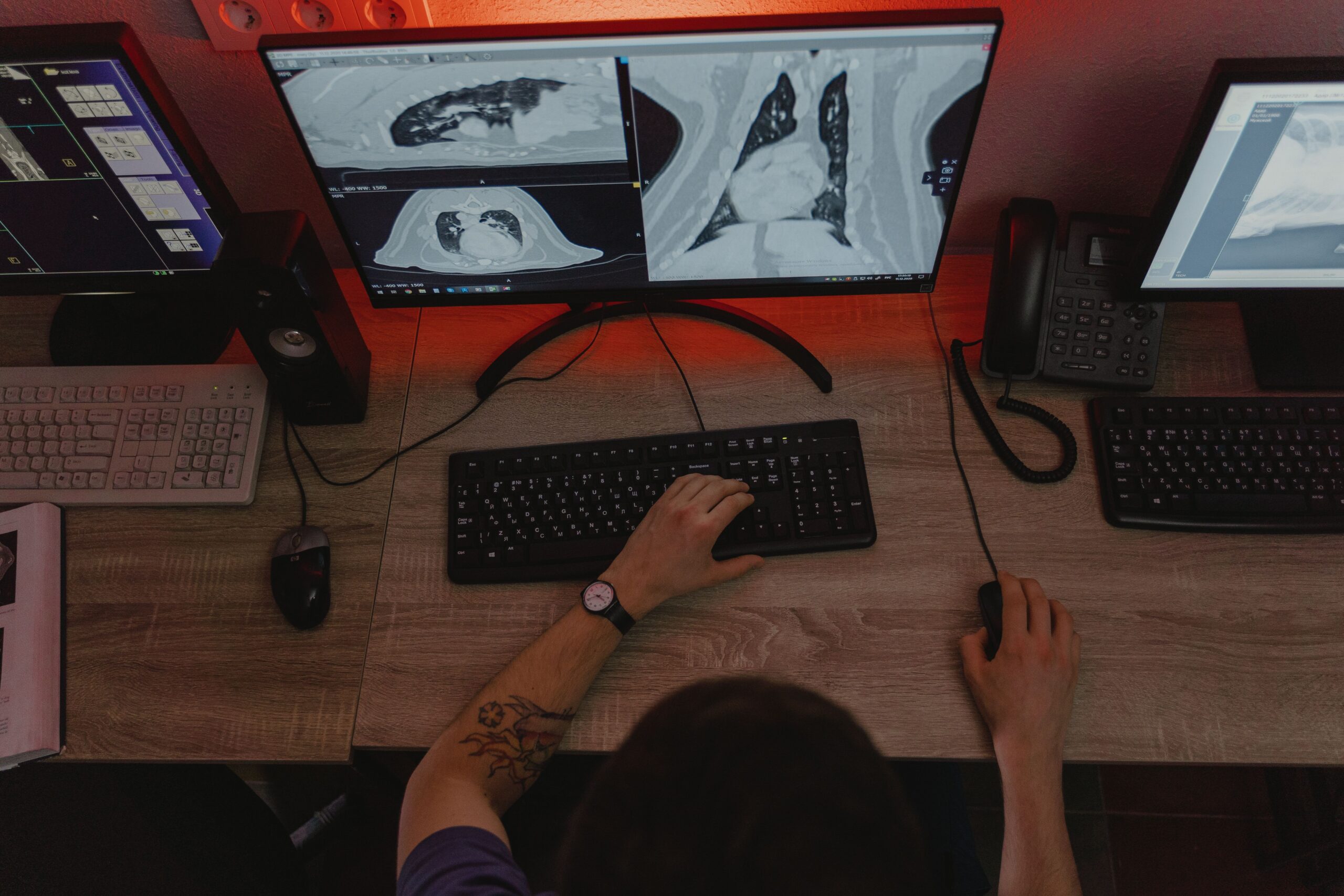
Artificial intelligence is transforming how doctors and hospitals detect diseases, analyzing medical images and clinical data with unprecedented precision. From radiology to dermatology, algorithms are becoming indispensable allies in early diagnosis.
Medical diagnosis has always been one of the most delicate and crucial areas of healthcare: an error or delay can mean the difference between life and death. Today, artificial intelligence is entering hospital wards and radiology departments as a decision-support tool, capable of analyzing vast amounts of clinical data and diagnostic images with speed and precision that in many cases surpass human capabilities.
Deep learning systems, trained on millions of medical images, can now recognize patterns imperceptible to the human eye. This is particularly evident in fields like radiology, oncology, and dermatology, where early diagnosis often represents the only effective weapon against serious diseases.
Intelligent Radiology
In recent years, computer vision algorithms have demonstrated the ability to identify pulmonary nodules, breast microcalcifications, and other anomalies with accuracy comparable to or exceeding that of expert radiologists. These tools do not replace the physician but act as an immediate second opinion, reducing the risk of false negatives and speeding up reporting times.
Dermatology and Cancer Screening
Smartphone-based applications now allow users to photograph a suspicious mole and receive a preliminary risk assessment for melanoma within seconds. While these tools don’t replace specialist visits, they represent valuable support for mass screening, especially in areas with limited access to dermatologists.
Predictive Analytics and Electronic Health Records
Beyond images, AI is also revolutionizing the analysis of structured clinical data. Predictive algorithms analyze electronic health records to identify patients at risk of deterioration, sepsis, or hospital readmission, enabling timely interventions before serious complications occur.
The main benefits of this integration include:
- Reduced waiting times for diagnosis
- Greater accuracy in identifying rare pathologies
- Decision support for physicians in areas with specialist shortages
- Continuous monitoring capabilities through wearable devices
- Reduced administrative workload for healthcare staff
Challenges to Address
Despite these advances, critical issues remain. The quality of training data must be ensured to avoid diagnostic biases that could disadvantage specific population groups. Additionally, the question of legal liability in cases of AI-assisted diagnostic errors remains an open issue in the legal systems of many countries.
Model interpretability also represents a significant challenge: physicians must be able to understand the reasoning behind an algorithm-suggested diagnosis, not simply accept it as an opaque black-box output.
The Future of AI-Augmented Medicine
Looking ahead, the integration of artificial intelligence and personalized medicine promises exciting scenarios: algorithms capable of suggesting tailored therapies based on a patient’s genetic profile, continuous monitoring systems that prevent crises before they occur, and increasingly proactive rather than reactive medicine.
The key to success will lie in collaboration between technology and human expertise: AI as a tool that amplifies physicians’ capabilities rather than replacing them, on a shared path toward more efficient, accessible, and precise healthcare for everyone.