
After more than a decade of public subsidies, 81.3% of Japanese care facilities surveyed in 2019 said they had introduced no care robot at all. The documented failure isn’t in the nursing homes — it’s upstream: of 93 development projects funded by Japan’s trade ministry, only 21 reached commercialisation. And the devices that actually work aren’t humanoids. They’re sensors under the mattress running a machine learning model that classifies sleep.
In February 2022 the Tokyo Council of Social Welfare asked 185 nursing homes in the capital whether they used care robots. 20.6% said they used them daily, 4.3% said they had introduced them but didn’t use them every day, and 75.1% said they had never introduced any. That is a modest picture for a country that has been funding the development and purchase of these machines with public money since 2013, and that is routinely described abroad as the world’s laboratory for eldercare robotics.
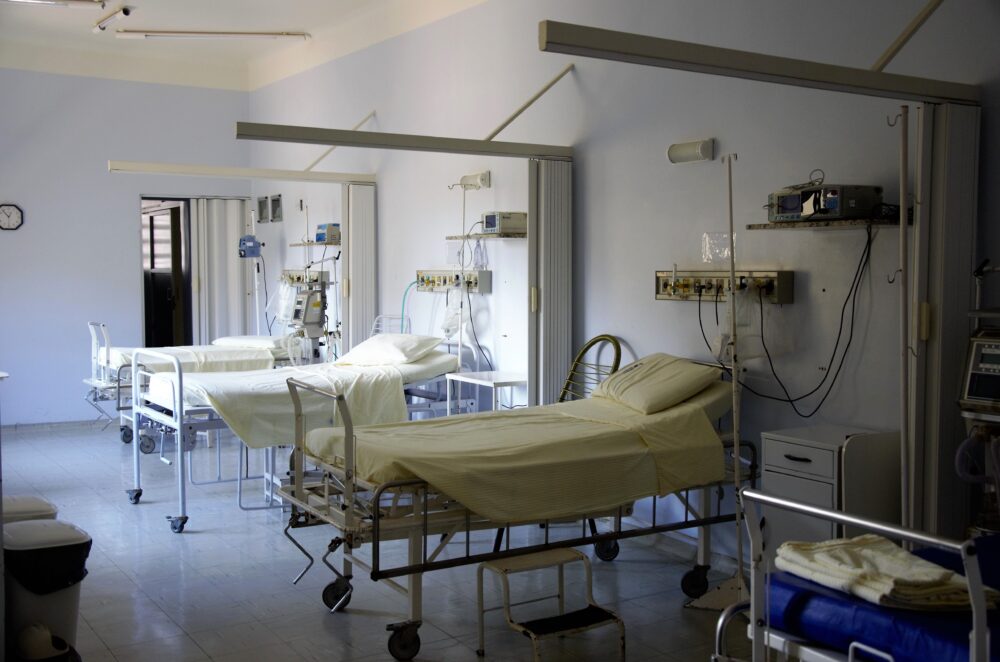
It’s worth being precise about where the artificial intelligence sits in this story, because it isn’t where you’d expect if you’re picturing a humanoid pushing a wheelchair. It sits under the mattress. Night monitoring devices — the category that has had the most traction in Japan — are piezoelectric or millimetre-wave radar sensors feeding a machine learning model that works on time series: micro-movements of the body, breathing, heart rate, pressure distributed across the bed. The system doesn’t produce a physical action, it produces a classification: the resident is asleep, the resident has got up, the resident is in a posture associated with fall risk. That classification lands on the night staffer’s smartphone and determines whether anyone walks down the corridor at all. It is pattern recognition software applied to a sleeping body, and it is the piece of AI that has genuinely taken hold in Japanese facilities.
The failure is real. It just isn’t where people look for it
The widely circulated framing — care homes handing the robots back — doesn’t survive checking. Robots bought with subsidies belong to the facility: you can’t return them, you can only stop using them. The documented returns belong to a different world. According to the Wall Street Journal of 13 July 2021, lease terminations and returns of Pepper units to SoftBank were increasing in Japan — in funeral homes, stadiums, department stores and hotels. Not in care.
Nor is this mostly a startup story. Pepper belongs to SoftBank Robotics, developed by France’s Aldebaran. Hug, the transfer lift, is made by FUJI, an electronics assembly machinery manufacturer. HAL, the exoskeleton, is Cyberdyne’s. Nemuri SCAN, the under-mattress sensor, comes from Paramount Bed, a hospital bed maker. Paro, the robotic seal used in dementia therapy, originated in a public research institute: Takanori Shibata developed it at AIST starting in 1993. Among the products that show up in the surveys, genuine startups are a minority — Triple W’s Dfree is one of the few.
The documented failure is upstream, in the industrial pipeline, and Japan’s Ministry of Economy, Trade and Industry (METI) put it in writing. In a Robot Policy Office document dated 11 December 2019, the ministry took stock of its care robot development programme: of 93 funded projects, only 21 had reached commercialisation. Of the 40 analysable among the rest, 10 had abandoned commercialisation and another 10 were still working on cutting costs. That is a high mortality rate, and it falls precisely at the stage where a prototype has to become something a nursing home can afford.
The subsidy figures are smaller than the mythology suggests
The development programme was run by METI in fiscal years 2013 and 2014, then by AMED from 2015 to 2017. In May 2014 METI selected 31 projects out of 47 applications, for roughly 780 million yen in total. On the purchase side, an MHLW (health ministry) notice of 13 May 2015 provided a grant of 100,000 yen per device — half the price if the device cost under 200,000 — through the Comprehensive Fund for Health and Care.
These are niche industrial-policy numbers, not a national moonshot. Which explains why the barrier facilities cite is always the same one: in the 2017 edition of the Kaigo Rōdō Jittai Chōsa, the national care-labour survey, 59.3% named the absence of a budget for adoption as an obstacle; in the FY2022 edition, 74.3% of public nursing homes named high cost as the main problem. The current scheme, the Care Technology Adoption Support Programme, is more generous: for FY2025 it sets ceilings of 1 million yen for lifting and assisted bathing, 300,000 yen for other robots, up to 2.5 million for ICT and between 4 and 10 million for integrated packages, on a budget of 9.7 billion yen that also covers management software.
The adoption curve moves, slowly
Lined up, the numbers describe real but glacial movement. In the 2019 care-labour survey, of 9,040 responding facilities, 81.3% said they had introduced no robot. In the previous edition, for 2017, the figure was 75.4%, and even the most widespread category — in-facility night monitoring — reached only 2.7%. A national survey of more than 9,000 facilities put adoption of any robot at around 10% in 2019; a 2021 study of 444 people providing home care found only 2% had any direct experience of a care robot. By FY2022 the share of public nursing homes with no robot at all had fallen to 49.9%.
Which machines hold up, and which don’t
The more useful question isn’t how many robots exist but which ones get used as intended. A postal survey of 2,000 nursing homes conducted in February 2023 by Tsuyoshi Ōhira — 182 valid responses, 110 from facilities that use the devices — asked exactly that, including in its response scale the option “introduced but discontinued or disposed of”. The result splits the field cleanly:
- Used as intended: monitoring robots, non-wearable lifts, management support software.
- Problematic: wearable transfer devices such as MuscleSuit and HAL, which record the largest number of facilities unable to use them as intended.
A separate study of staff at healthcare and care facilities found that after introduction, roughly 60% of communication robots were not sufficiently used. Ōhira’s sample is small — the valid response rate is 9.1% — and there is no consolidated national abandonment figure. But the direction is consistent: what works is what runs in the background and produces information; what fails is what has to be worn, charged, calibrated and explained at every shift handover.
Meanwhile, the health ministry says the opposite
Here is the part that dismantles the idea of a blanket failure. In a March 2021 report on an effectiveness verification study, the MHLW estimated that installing monitoring sensors on every bed would raise the average number of residents a single night staffer can handle by 35.2%, with a reduction of roughly 17 minutes (–5.7%) in time spent on direct care and checking rounds. On that basis, night staffing requirements were loosened. Ministerial assessments of devices in use, in other words, are positive; the negative assessment concerns product development. They measure different things and should be read separately.
Finally, there is a finding that inverts the economic premise of the whole programme. Researchers from Stanford, the University of Tokyo and Notre Dame analysed 2017 data on 857 Japanese nursing homes using robots and found those facilities employ roughly 28% more care workers and 39% more nurses, with total employment about 26% higher. Complementarity, not substitution. A critical reading fairly notes that more headcount is not the same as more hours worked. But if the point of the subsidies was to offset a labour shortage by taking work away from people, the data suggest that the facilities buying robots are the ones that can already afford to hire — and that the sensor under the mattress, rather than replacing the night staffer, tells them where to go.