
The fusion of artificial intelligence and quantum computing is opening new technological horizons. This synergy promises to revolutionize sectors like cryptography, molecular simulation, and complex optimization.
Quantum artificial intelligence represents one of the most promising frontiers in modern technology, combining the power of machine learning with the unique properties of quantum mechanics. This convergence is creating new possibilities that could radically transform how we approach complex computational problems.
What is Quantum AI
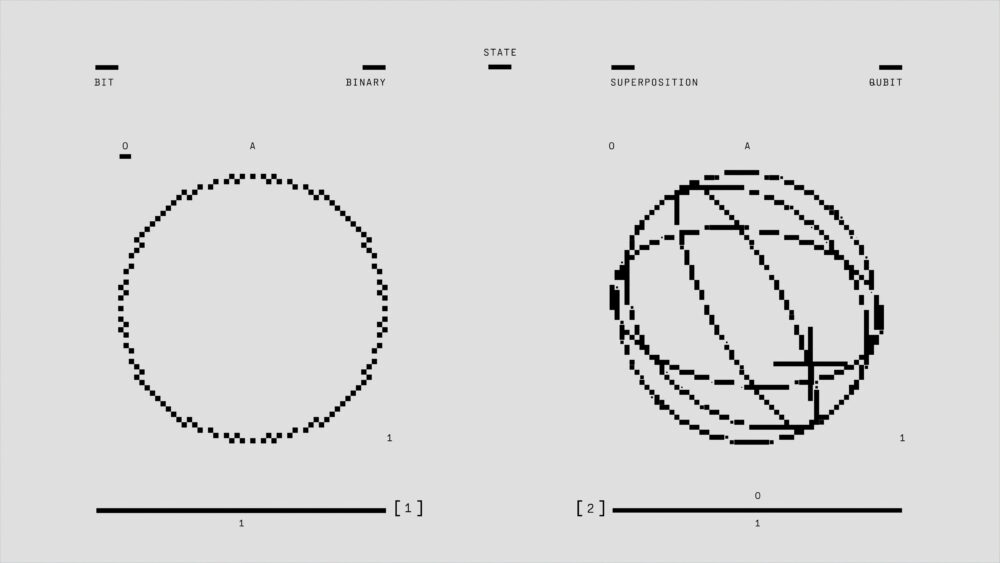
Quantum AI leverages quantum mechanics principles, such as superposition and entanglement, to enhance artificial intelligence algorithms. While classical computers process information in bits that can be 0 or 1, quantum computers use qubits that can exist in both states simultaneously, exponentially multiplying computational capacity.
Revolutionary Advantages
This technology offers significant advantages across various areas:
- Processing Speed: Quantum algorithms can solve certain problems thousands of times faster than classical systems
- Complex Optimization: Ability to find optimal solutions in enormous search spaces
- Molecular Simulation: Accurate modeling of natural quantum systems
- Advanced Cryptography: Development of virtually unbreakable security systems
Practical Applications
Quantum AI applications are emerging in crucial sectors. In pharmaceuticals, quantum simulation accelerates drug discovery by modeling molecular interactions with unprecedented precision. In finance, quantum algorithms optimize complex portfolios and manage risks in real-time.
The logistics industry benefits from quantum optimization to solve routing and distribution problems involving thousands of variables. Additionally, cybersecurity is developing new cryptographic protocols that leverage quantum entanglement for ultra-secure communications.
Challenges and Limitations
Despite its promises, quantum AI faces significant challenges. Current quantum computers are extremely sensitive to environmental interference and require extreme operating conditions, such as temperatures near absolute zero. Quantum decoherence limits computation time, while quantum error correction remains a complex technical problem.
The Future of Quantum AI
Global investments in this technology are growing rapidly, with companies like IBM, Google, and Microsoft developing increasingly powerful quantum platforms. It’s predicted that within the next decade, we’ll see the first large-scale commercial applications, especially in sectors requiring complex optimizations.
Quantum AI won’t completely replace classical artificial intelligence but will integrate with it, creating hybrid systems that leverage the strengths of both technologies. This evolution will mark the beginning of a new computational era, where current data processing limits will become memories of the past.