
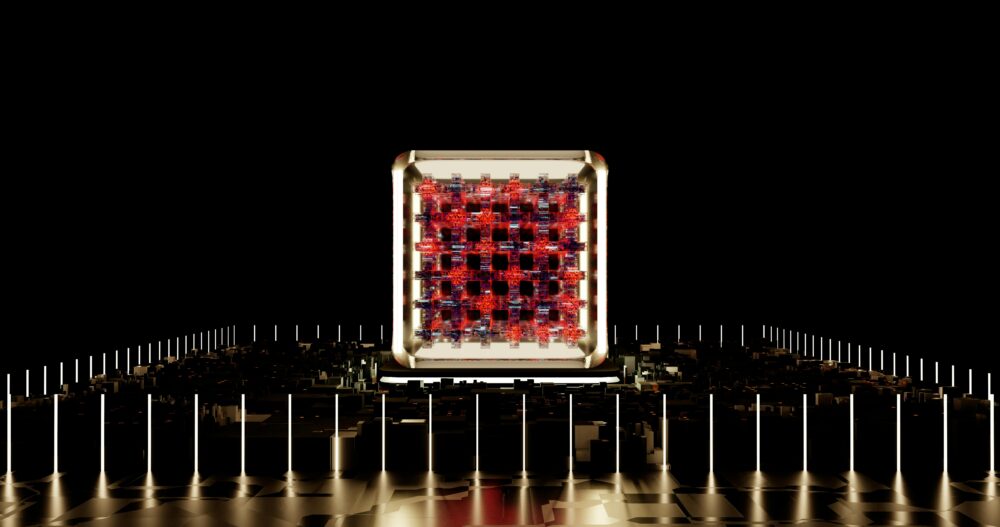
The marriage between artificial intelligence and quantum computing is opening unimaginable frontiers, promising to completely revolutionize how machines learn and solve complex problems. This technological fusion could be the key to overcoming current computational limitations.
Quantum artificial intelligence represents one of the most promising and fascinating frontiers of modern technology. While traditional AI relies on classical bits that can only be 0 or 1, quantum AI harnesses qubits, which can exist in a superposition of states, exponentially multiplying computational power.
How Quantum AI Works
Quantum computers utilize principles of quantum mechanics such as superposition and entanglement to process information in ways that classical computers cannot replicate. When this power combines with machine learning algorithms, extraordinary possibilities emerge:
- Quantum parallelism: ability to simultaneously explore multiple solutions
- Advanced optimization: solving NP-complete problems in drastically reduced timeframes
- Quantum pattern recognition: identifying correlations invisible to classical systems
Revolutionary Applications
Practical applications of quantum AI are emerging across several strategic sectors. In drug discovery, quantum-enhanced systems can simulate complex molecular interactions, accelerating new medicine development from decades to months. In the financial sector, quantum optimization enables risk analysis and portfolio management with unprecedented precision.
Particularly promising is the application in cryptography and cybersecurity, where quantum AI can both threaten current security systems and provide new forms of unbreakable quantum protection.
Current Challenges and Limitations
Despite its revolutionary potential, quantum AI faces significant challenges. Current quantum computers are extremely sensitive to environmental noise and require extreme operating conditions, such as temperatures near absolute zero. Additionally, developing efficient quantum algorithms requires deep understanding of both quantum mechanics and artificial intelligence.
The Quantum-Enhanced Future
Experts predict that in the next 10-15 years we will witness significant breakthroughs in quantum AI. Tech giants like IBM, Google, and innovative startups are investing billions in developing increasingly stable and powerful quantum processors. The goal is to achieve definitive ‘quantum advantage’, where quantum AI will unequivocally surpass classical system capabilities.
The integration between AI and quantum computing represents not just a technological evolution, but a true revolution that could redefine the limits of what’s possible in information processing and solving complex problems that today seem unsolvable.