
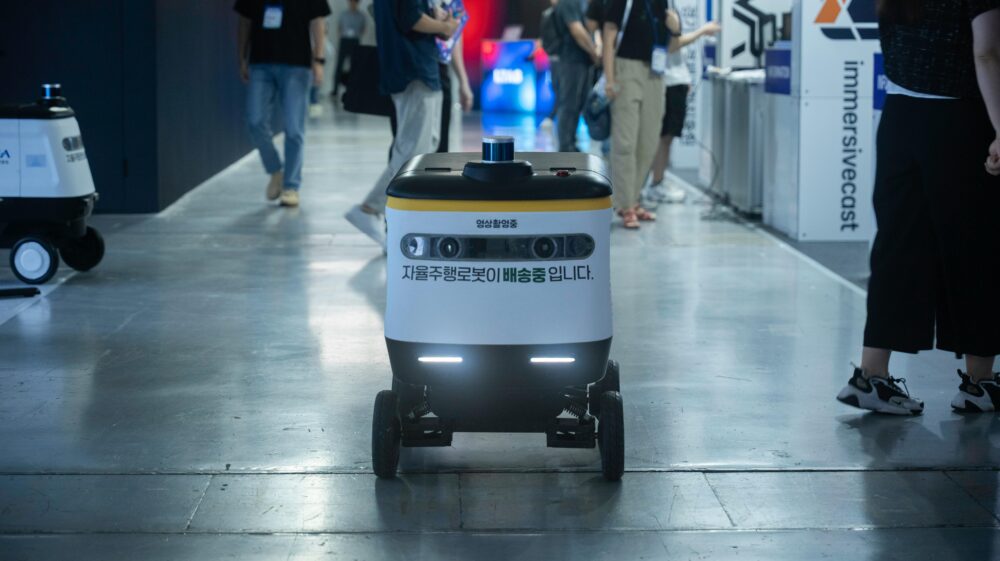
Autonomous AI represents the next major leap in artificial intelligence, featuring systems capable of operating and making complex decisions without human intervention. From autonomous driving to medicine, this technology is redefining the boundaries of automation.
Autonomous artificial intelligence represents one of the most advanced and promising frontiers of modern technology. These are AI systems capable of operating, learning, and making complex decisions completely independently, without requiring constant supervision or human intervention.
What is Autonomous AI
Unlike traditional AI systems that follow predefined rules or require human input to function, autonomous AI is designed to:
- Autonomously analyze the surrounding environment
- Identify problems and opportunities
- Develop action strategies
- Implement solutions without supervision
- Dynamically adapt to unexpected situations
This self-management capability is made possible by the integration of advanced technologies such as deep reinforcement learning, natural language processing, and multi-sensory perception systems.
Revolutionary Applications
Autonomous AI applications are transforming numerous industrial sectors. In transportation, autonomous vehicles use advanced sensors and machine learning algorithms to navigate traffic, avoid obstacles, and optimize routes in real-time.
In medicine, autonomous systems are emerging for early disease diagnosis, medical imaging analysis, and even robotic surgery. These systems can process enormous amounts of clinical data and identify patterns that escape the human eye.
In the financial sector, autonomous AI manages investment portfolios, executes high-frequency trading, and detects fraud in real-time, continuously adapting its strategies to market conditions.
Challenges and Ethical Considerations
Despite enormous potential, autonomous AI presents significant challenges. Decision transparency remains a crucial problem: understanding how these systems reach certain conclusions is fundamental to ensuring trust and accountability.
Security issues are equally important. Systems that operate autonomously must be extremely robust and reliable, especially in critical applications like medicine or transportation.
The Future of Artificial Autonomy
Experts predict that within the next decade we will see increasingly sophisticated autonomous AI systems, capable of managing entire urban infrastructures, optimizing global energy networks, and even conducting independent scientific research.
The evolution toward autonomous AI will not completely replace human intervention, but will create new paradigms of human-machine collaboration, where artificial intelligence manages routine and complex operations, freeing humans for high-level creative and strategic activities.