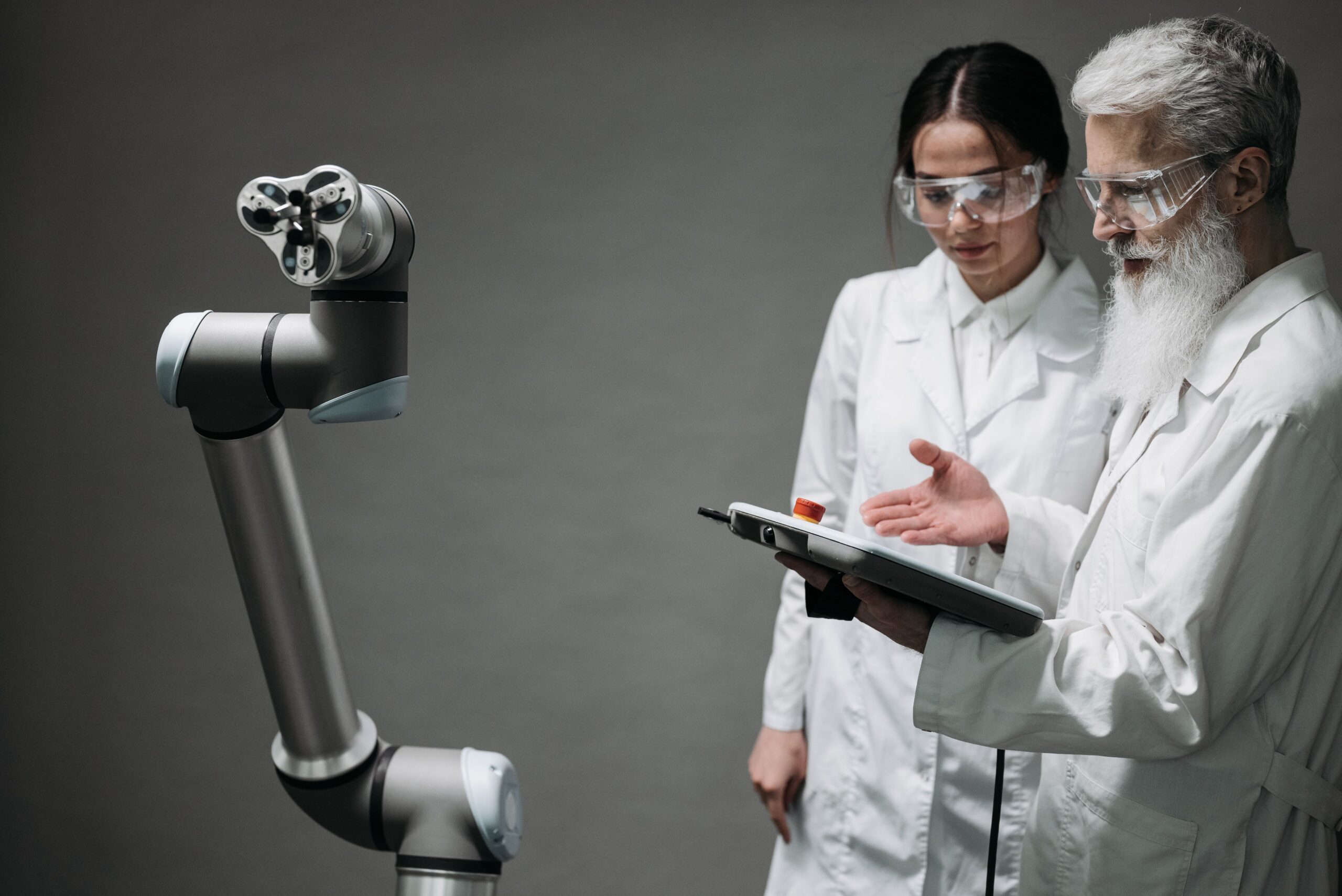
Intelligent automation is transforming the labor market at an unprecedented pace, creating new professions while making others obsolete. An analysis of how society, businesses, and workers can navigate this epochal transition.
Artificial intelligence is no longer a technology of the future: it is already here, quietly reshaping the global employment landscape. From assembly lines to law offices, from call centers to medical practices, algorithms are taking on tasks that until a few years ago seemed the exclusive domain of human intelligence.
According to various international studies, by 2030 millions of jobs could be significantly transformed or eliminated by intelligent automation. Yet the dominant narrative of total human replacement by machines is misleading: reality is far more nuanced and complex.
A Labor Market in Mutation, Not Extinction
The most credible studies indicate that AI doesn’t simply eliminate jobs, but radically transforms them. Today, a lawyer uses AI tools for case law research, a radiologist relies on algorithms for preliminary image analysis, and a copywriter collaborates with text generation systems to speed up content production.
This phenomenon, defined as “augmentation” rather than “automation,” shifts the value of human work toward skills that machines struggle to replicate:
- Critical thinking and decision-making in ambiguous contexts
- Emotional intelligence and interpersonal relationship management
- Creativity applied to solving complex problems
- Ability to supervise and correct AI outputs
- Ethical competence and judgment in delicate situations
New Professions Born from AI
Alongside the disappearance of certain roles, entirely new ones are emerging. The “prompt engineer,” specialized in effectively dialoguing with language models, was a nonexistent profession just a few years ago. Similarly, demand is growing for AI ethics experts, algorithmic auditors, model training specialists, and professionals dedicated to human oversight of automated systems.
The most forward-thinking companies are already investing heavily in reskilling their workforce, understanding that the real challenge is not so much technological as it is cultural and educational.
Inequalities to Monitor
Not all sectors and population segments are affected equally. Low-skill jobs and those characterized by repetitive tasks are more vulnerable to automation, while professions requiring creativity, empathy, and complex judgment appear, for now, more protected.
This imbalance risks widening existing economic inequalities, particularly affecting less educated workers and developing economies, which are less equipped to manage such a rapid transition.
Public Policy and Shared Responsibility
Faced with this transformation, governments are called upon to rethink welfare systems, continuous training, and social protection. Some countries are experimenting with forms of universal basic income, while others are investing in massive professional requalification programs.
Companies, for their part, bear the responsibility of managing this transition ethically, avoiding indiscriminate layoffs and instead investing in employee training to complement, not replace, human work.
The future of work in the age of artificial intelligence is not predetermined: it will depend on the political, economic, and cultural choices we make today. The challenge is not to halt technological progress, but to guide it toward a development model that is truly inclusive and sustainable for everyone.